Drawing practice
Pick a prompt, draw on paper, then upload a photo.
Practise free: open any prompt and start the timer
Sign up to upload your drawings and keep them in one place.
103 of 113 prompts
CEED
Part B · 103 prompts- Drawing 30 min
Chinu's kitchen from the point of view of a chair
One afternoon, seven years old Chinu and her pet dog are enjoying snacks in their kitchen. Chinu’s father suddenly enters the kitchen and sees this pleasant moment with a smile. Sketch the whole scene from the point of view of a chair kept nearby. Additional Instructions: • Use only black/HB-series pencils • Do not use other colours • Draw only in the given space Evaluation Criteria: • Character and Expressions • Proportion and Composition • Quality of Sketching • Environment and Props
CEED 2026 paper
- Storyboard 30 min
A four-frame story using the given symbols
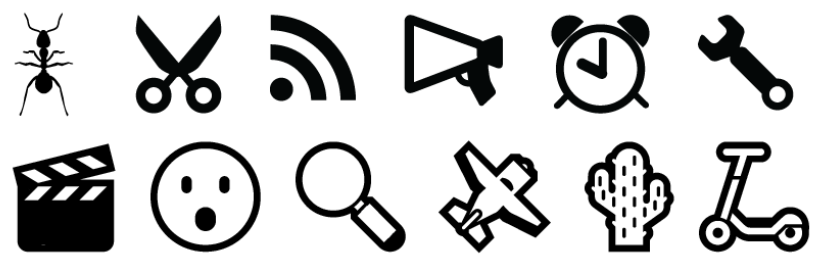
In the given frames, sketch a story by incorporating the symbols shown below. Follow these instructions: • Give an appropriate title to the story. • Use ANY TWO symbols in each frame; Use each symbol ONLY ONCE in the whole story. • The symbols cannot be modified, but can be rotated, flipped or scaled proportionately. • You are free to sketch additional elements (backgrounds, characters, props etc.) to make the story meaningful. • Label the frames in the bottom left corners with the number 1,2,3, and 4 to indicate the sequence of your story. Evaluation criteria: • Originality • Graphical Narrative (Story Communication) • Humour and Surprise • Clarity and Neatness of Sketches
CEED 2026 paper
- Visual sensitivity 30 min
Four icons for the Indian Museum of Science
A new museum with the theme “Indian Museum of Science” is being set up, which will cater primarily to Indian visitors. Create four icons based on the museum theme, to communicate the following sections to visitors: • Robotics • Energy Science • Ocean Science • Food Technology All icons should be clear and visible, and have a consistent visual language. Draw the icons in the FOUR squares provided in the answer booklet. Icons should only have visuals. DO NOT use text. Only BLACK & WHITE colours should be used for the icons. Evaluation Criteria: • Consistency of visual language • Thematic appropriateness • Effective communication • Composition, Clarity and Neatness
CEED 2026 paper
- Form sensitivity 30 min
A living-room seat inspired by a sphere
Conceptualise and render a usable single seat furniture that is inspired by a sphere, for a living room. The sphere may be modified by cutting, adding, subtracting, deforming and repeating. However, the essence of the sphere should be retained. Evaluation Criteria: • Uniqueness of the form • Form-Function relevance and relationship • Detailing • Rendering quality
CEED 2026 paper
- Problem identification 30 min
An elderly couple's journey from Srinagar to Chennai
An elderly couple from Srinagar is travelling to Chennai for medical treatment. They will travel by train for most of their journey and plan to take a bus and auto rickshaws for all local commutes. Imagine their journey and identify FOUR distinct problems that they might face, which may need design solutions. Write the FOUR problems statements starting with the words “How can we…” for the given context, in the space provided on the answer booklet. (2 x 4 = 8 marks) For your reference, an example of "How can we ..." from another context: How can we - make science learning enjoyable for primary school children? Select any ONE of the four identified problems statements. Draw TWO potential design solutions for the selected problem statement in the boxes provided on the answer booklet. Write a short title for each solution in the space provided inside the box. (6 x 2 = 12 marks) Evaluation Criteria: • Variety and uniqueness of the problems • Relevance of the problems • Practical feasibility of the design solutions • Clarity in communication
CEED 2026 paper
- Drawing 30 min
Chased by a bear: the fox's point of view
Two kids, Kaa and Kii, are on an adventure trip in a forest. While exploring, suddenly a bear emerges and starts chasing them. The kids start running in panic through the forest. A fox is watching the whole scene. Sketch this scene from the fox’s point of view. The sketch should be clear and visible. Additional Instructions: • Use only black/HB-series pencils • Do not use other colours • Draw only in the given space Evaluation Criteria: • Character and expressions • Proportion and composition • Quality of sketching • Environment and props
CEED 2025 paper
- Storyboard 30 min
A continuous story across four frames
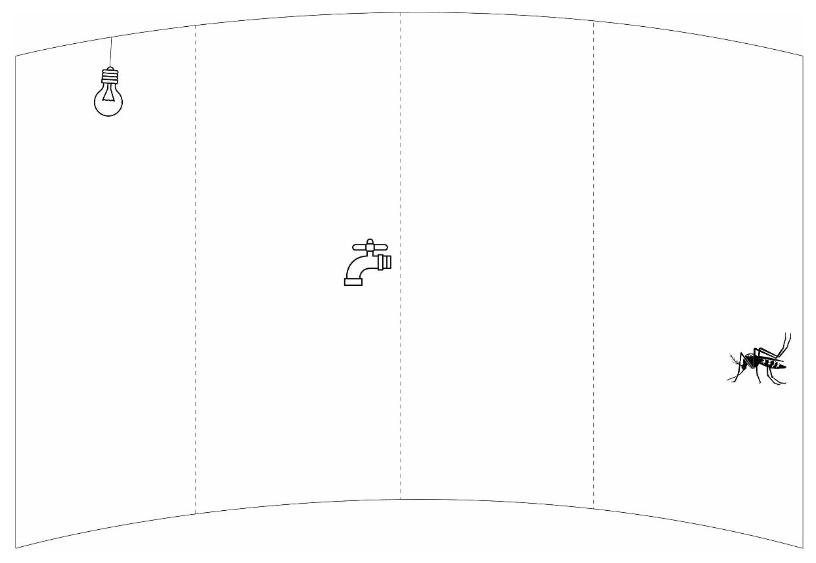
Shown below is a canvas with four frames containing certain elements. Create a meaningful sequence of visuals using the elements in the frames. Ensure that continuity is maintained across the frames by using additional prop(s) and/or character(s) as needed. You may choose to create the sequence either from left to right or right to left, but indicate the direction using an arrow. Give an appropriate title in the space provided. Evaluation criteria: 1. Imagination and Creative ideas 2. Composition 3. Drawing quality and clarity 4. Continuity in the sequence
CEED 2025 paper
- Visual sensitivity 30 min
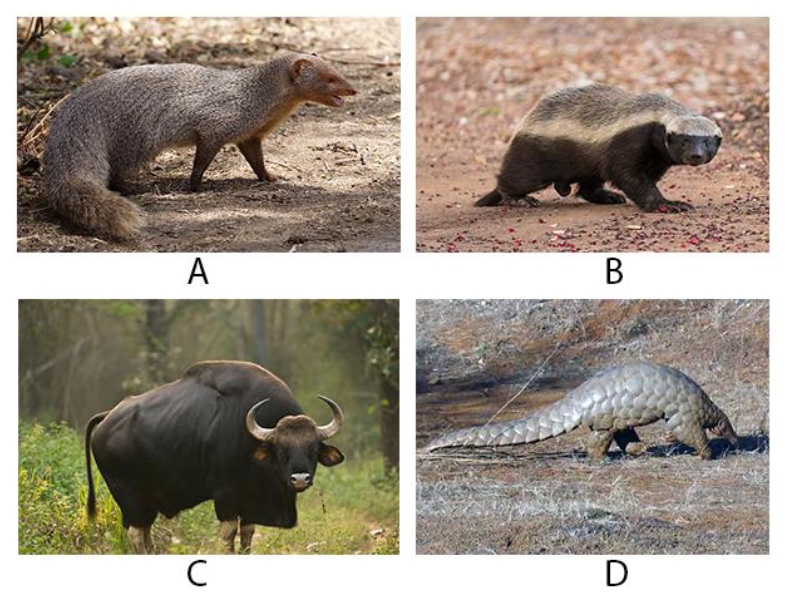
Zoo signage icons for four new animals
Shown below are new animals that have been acquired by an Indian Zoo. A. Indian Grey Mongoose B. Honey Badger C. Indian Bison D. Indian Pangolin The Zoo wishes to create a signage to guide visitors around the enclosures of these animals. Create four icons using only BLACK colour to indicate the animal in the enclosure. All icons should be clear and visible, and have a consistent visual language. Draw the icons in the FOUR squares provided in the answer booklet. Evaluation criteria: 1. Consistency in the visual language 2. Representation of the animals 3. Visual composition 4. Clarity and neatness
CEED 2025 paper
- Form sensitivity 30 min
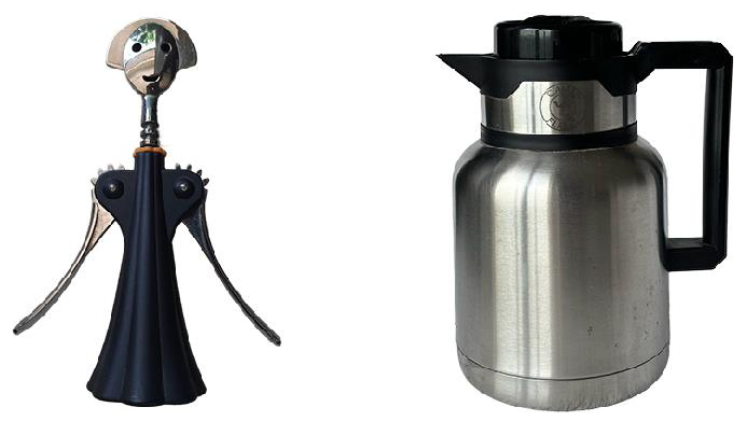
Re-imagine a tea flask inspired by a character product
Shown on the left is a character-based design of a product. Inspired from this product, re-imagine, conceptualise, and render the tea flask given on the right. Make it clear and visible. Evaluation Criteria: • Characterization of the product • Relevant details and usability • Quality of sketching • Surface shading/rendering
CEED 2025 paper
- Problem identification 30 min
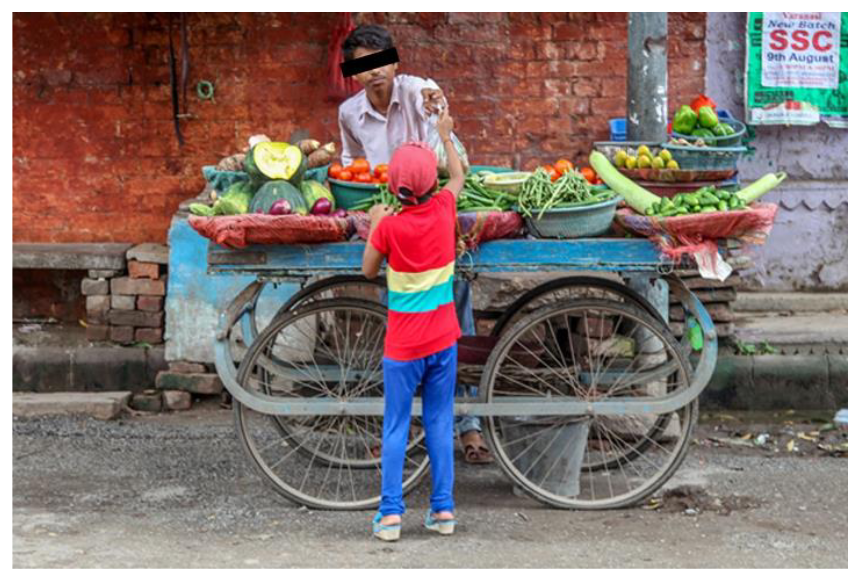
Problems at a vegetable cart: buyers and sellers
A typical vegetable cart, as seen in India, is shown below. A. Identify and list FIVE distinct problems from a buyer’s point of view and FIVE distinct problems from a seller’s point of view in this context. List the problems only in the given space. (5 + 5 marks) B. From the above-listed problems, draw and visually explain any ONE problem of the buyers, and any ONE problem of the sellers in the given boxes. (5 + 5 marks) Additional Instructions: 1. Do not limit yourself to the buyer and seller in the given image. 2. Write the identified problems only on the dotted lines. 3. Draw and visually explain the listed problems only in the given boxes. Evaluation Criteria: 1. Ability to identify unique and relevant problems in the given context 2. Severity of the problems identified 3. Ability to communicate problems through visuals 4. Presentation, clarity and neatness
CEED 2025 paper
- Storyboard 30 min
Chinnu lifts her toy carton: four frames
7-year-old Chinnu has collected all her old toys in a carton. The carton weighs around 2 kg. Draw Chinnu lifting the box and keeping it in the top shelf of her cupboard in the 4 frames given in the answer sheet. Additional Instructions: • Use only pencils • Do not use colours Evaluation criteria: • Humour • Expressions • Body Language • Anticipation and exaggeration
CEED 2024 paper
- Creativity 30 min
If the human head were a cube: four interactions
Imagine the human head as a cube. With this scenario, illustrate the following interactions inside the given boxes (in the answer booklet) in this order: 1. Human-human 2. Human-animal 3. Human-environment 4. Human-object Use only BLACK pencil/pen. Draw only within the boundaries of the boxes. Write the titles below the boxes, in the space provided. Evaluation criteria: • Uniqueness: Ability to create unusual images • Diversity: Variation between each created image • Clarity: Effective use of visual elements and titles • Fun: Ability to use humor and surprise in the images and titles
CEED 2024 paper
- Visual sensitivity 30 min
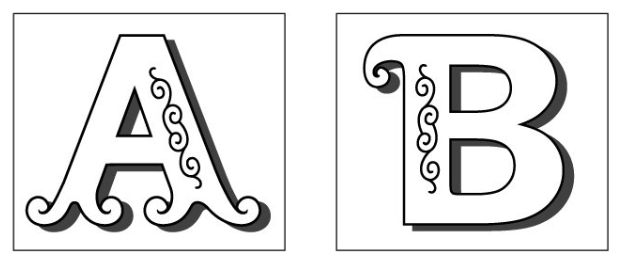
Write ‘Forest’ in an ornamental font
Shown below are two letters A & B of an ornamental font. Using this font style create the word ‘Forest’ (the first letter in uppercase and the remaining in lowercase). Evaluation criteria: • Consistency in visual characteristics • Font anatomy • Proportion • Rendering skills
CEED 2024 paper
- Form sensitivity 30 min
A living-room seat inspired by a given 3D form
Inspired from the given three-dimensional form, conceptualise, sketch, and render a single seater furniture for a living room. Evaluation Criteria: • Consistency with the visual language of the form • Form should complement function • Relevant details of the product • Surface shading • Quality of lines/strokes
CEED 2024 paper
- Problem identification 30 min
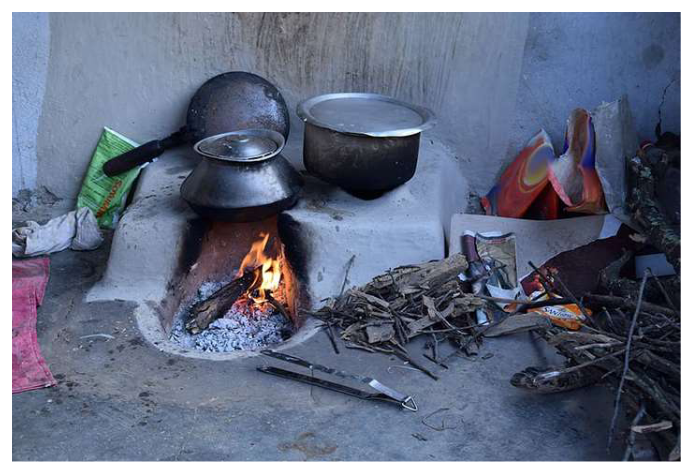
Five design problems in a rural kitchen
Shown below is the image of a rural kitchen. There are many challenges in using such setup for cooking and related activities. Draw and annotate FIVE distinct design problems in this context. • Use only one visual for each problem. • Answer in the given space only. • Adhere to no more than 5 problems. Evaluation Criteria: • Significance of the identified problems • Ability to identify unique problems • Ability to explain the problem through visuals
CEED 2024 paper
- Drawing 30 min
The Singh family selfie, from the room camera's view
Mr. Singh (5 Feet, 11 inches tall) is smiling and capturing a selfie of his entire family with his mobile phone held vertically. He is with his wife (5 feet tall), standing towards his left with her two mischievous kids. Pinky (girl) and Bablu (boy) are making funny expressions looking into the mobile. They all are standing facing a digital camera installed in the top corner of room. The size of the room is 12 x 12 x 12 feet. Draw the picture of the above description from the point of the view of a digital camera capturing this moment. Additional Instructions: • Use only pencils. • Do not illustrate the surroundings. Only draw the family. Evaluation criteria: • Imagination • Overall composition of the picture • Quality of lines • Attention to details • Anatomy and perspective
CEED 2023 paper
- Visual sensitivity 30 min
A visual identity for the Indian Women’s Hockey Association
Create a new visual identity for Indian Women’s Hockey Association. The identity has to be original and should have the abbreviations ‘IWHA’ as part of the visual design. DO NOT draw from any existing designs. Evaluation criteria: • Creative visual representation • Effective communication of the concept • Visual Aesthetics • Composition
CEED 2023 paper
- Form sensitivity 30 min
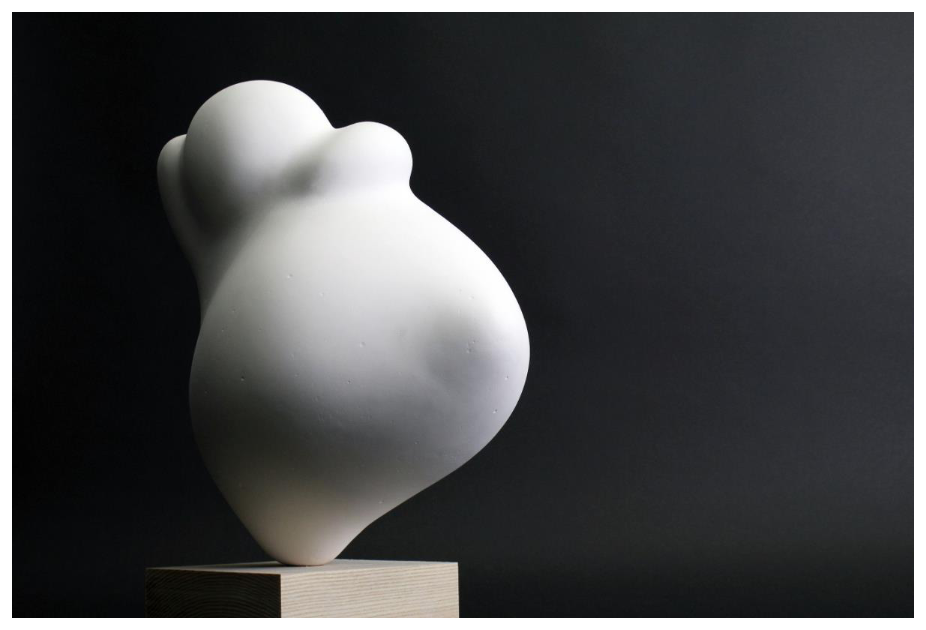
A children's cutlery set inspired by an abstract form
An abstract three-dimensional form is shown below. Visualise the form of a cutlery set (fork, bowl and glass) for 3-6 Yrs. children based on the image of the given form. It should match the design language with relevant details. Sketch and render the form of the cutlery set. Evaluation Criteria: • Consistency with the visual language of the form • Form should complement function • Relevant details of the product • Surface shading • Quality of lines/strokes
CEED 2023 paper
- Problem identification 30 min
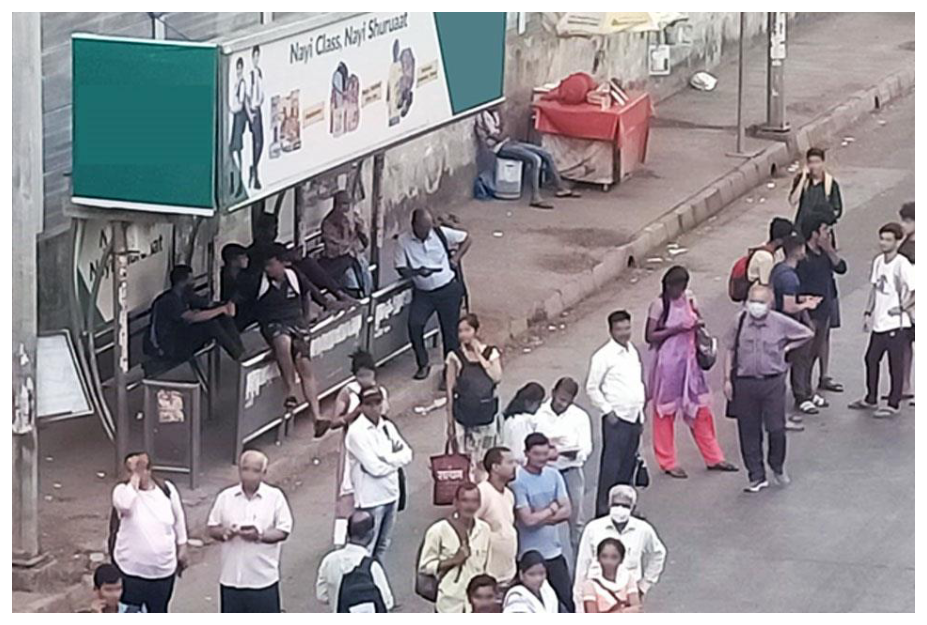
Five design problems at a busy bus stop
Shown in the image above is an example of a bus-stop during the busy hours. Draw and annotate FIVE distinct design problems in this context. • Use only one visual for each problem. • Answer in the given space only. Evaluation Criteria: • Severity of the identified problem • Ability to make distinct observations • Ability to communicate through visuals
CEED 2023 paper
- Drawing 30 min
An RT-PCR swab test, in a free-hand sketch
A sample is being collected for an RT-PCR swab test for COVID-19. The man collecting the sample is standing in a PPE (protective) suit. The lady who is being tested is sitting on a chair in front of him. She shows uneasiness through her facial expression when a swab is inserted in her nose. Draw a free-hand sketch of the moment described above. Drawing of surroundings is not necessary. Evaluation criteria: • Quality of composition • Observation and drawing skills • Expression of the person being tested • Scale and relative proportions • Use of light and shade
CEED 2022 paper
- Visual sensitivity 30 min
Four icons for an Indian mela
Create visual icons in the boxes given, for the following in an Indian mela (fair/exhibition) 1. Information Desk 2. Craft zone 3. Children zone 4. Game zone Evaluation criteria: • Aesthetics of 2D form • Effectiveness to convey meaning • Consistency of visual language (style) • Composition
CEED 2022 paper
- Form sensitivity 30 min
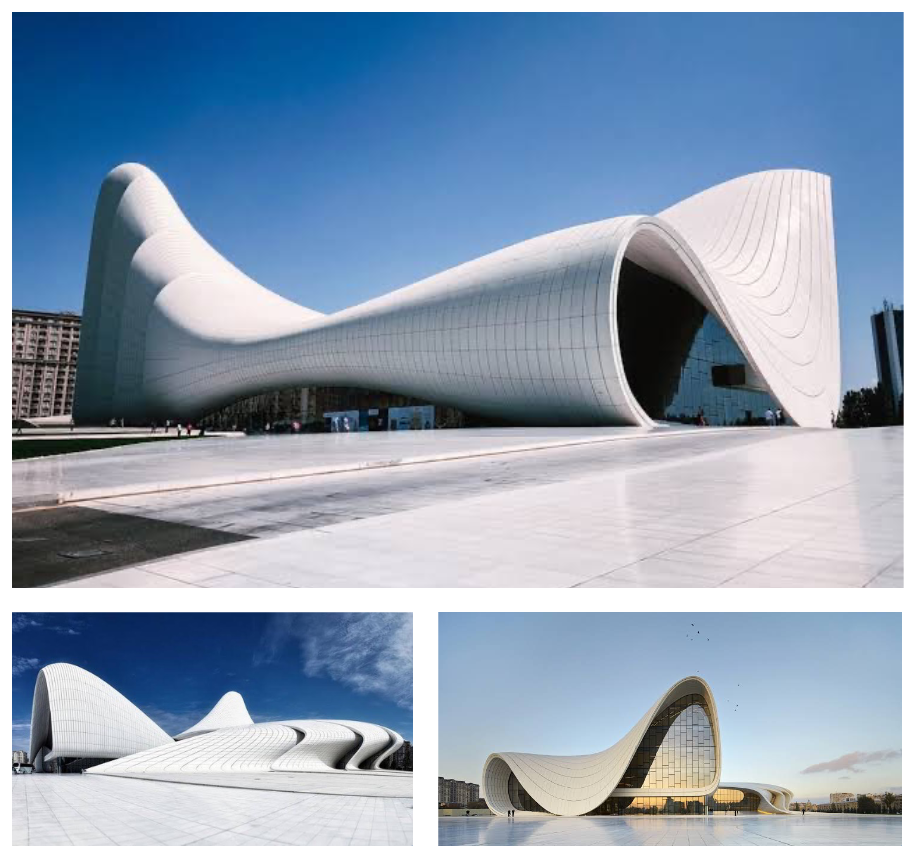
An electric iron inspired by a building
Three views of a building are shown below. Visualise the form of an electric iron (for ironing clothes) based on the image(s) of the given building. It should match the design language with relevant details. Sketch and render the form of the electric iron. Evaluation Criteria: • Sensitivity towards form • Consistency with the visual language of the form • Relevant details of the iron • Surface shading • Quality of lines/strokes
CEED 2022 paper
- Problem identification 30 min
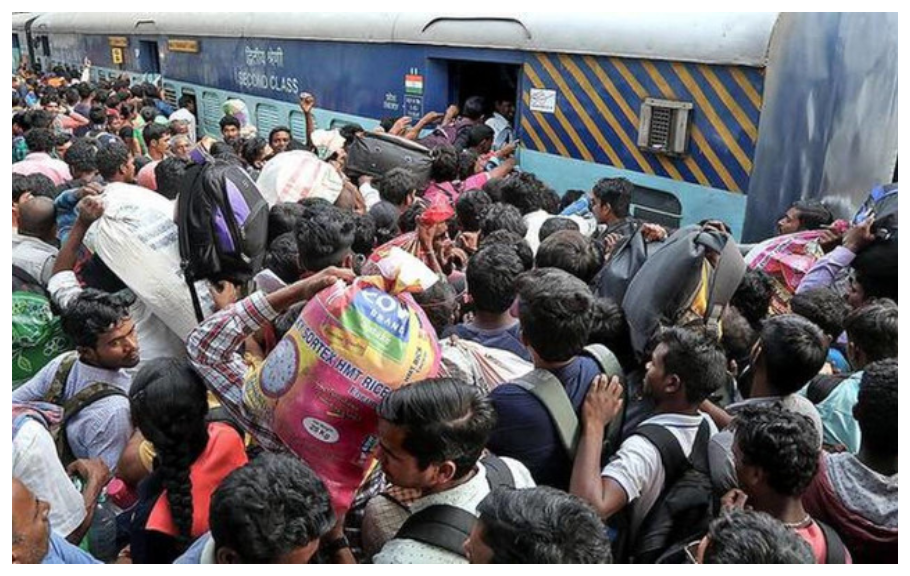
Boarding a crowded general compartment: ten design problems
Image source: thehindu.com Getting into the general compartment of a long-distance train is not a pleasant experience, especially for women, children, elderly and the disabled. The photo depicts one such scene. In the space provided in the answer booklet, list TEN unique design problems or opportunities in this situation. Each problem or opportunity could be based on either what you can observe in the photo or your experiences as a passenger. Each problem or opportunity should have potential for a design solution. For example, large crowds or less availability of seats are not design problems. (10 marks) Within the space provided clearly illustrate TWO design problems or opportunities that you consider to be the most important. (2x5 marks) Focus on depicting problems and opportunities. DO NOT provide solutions. Evaluation criteria: 1. Severity of the identified problems 2. Diversity of observations 3. Analytical skills 4. Communication
CEED 2022 paper
- Drawing 30 min
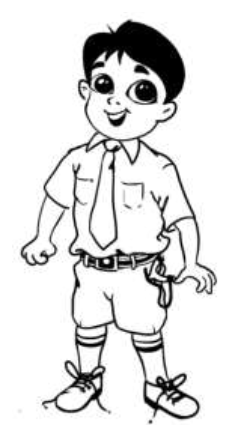
Rohan, the comic-book boy, in two situations
A comic book is to be illustrated that tells the story of Rohan. In the morning, when he goes to school, Rohan looks like the image given below, well dressed with combed hair and ironed clothes. But by the time he returns home, like any playful young boy, he has a dishevelled look with dirt and grime all over. In summer he loves to shoot mangoes out of the tree with his catapult and during monsoon he loves to play football despite the puddles. Create separate illustrations of the character in the following two situations 1. Rohan shooting the mango out of the tree. (10 marks) 2. Rohan kicking the football oblivious of the muddy ground after rains. (10 marks) Additional Instructions: • Make a line drawing using only pencils. Do not use any kind of colour. • Do not illustrate the surroundings, but only the boy and what he is physically interacting with. Do not draw the tree or the entire playground but only the catapult and immediate floor he is standing on if the composition requires it. Evaluation criteria: 1. Ability to keep the character consistent 2. Expression and body gesture of the character 3. Line quality and finish of the drawing
CEED 2021 paper
- Visual sensitivity 30 min
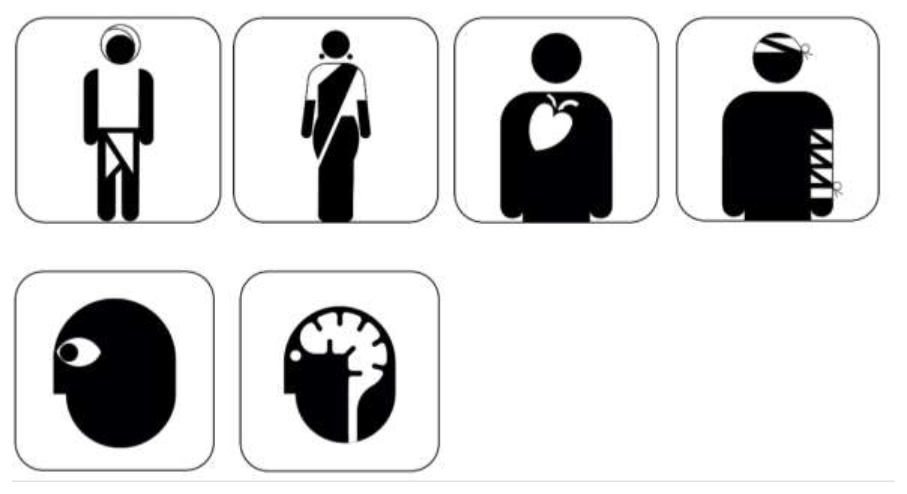
Four new hospital ward icons in a given style
A rural hospital uses the following icon sytem to depict Male, Female, Cardiology, Casualty, Ophthalmology and Neurology. The hospital then decides to expand, and opens four new wards which are as follows: • COVID-19 Isolation Ward • Cancer Ward • Paediatric (Children) Ward • Maternity Ward Create icons for these four wards using only BLACK colour. All icons should follow the same visual language. Draw the icons in squares provided in the answer booklet. Evaluation criteria: 1. Consistency with given examples 2. Composition 3. Clarity of communication
CEED 2021 paper
- Form sensitivity 30 min
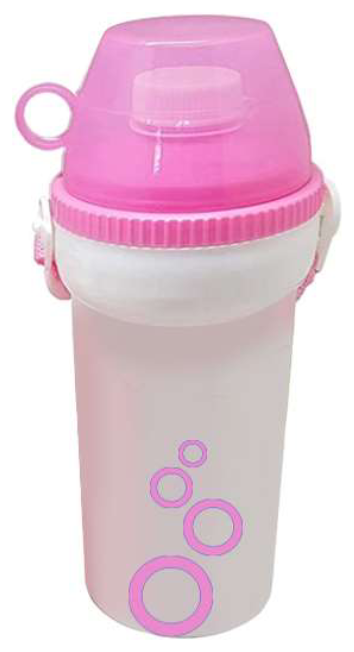
A lunch box to pair with a kid's water bottle
Image of a kid’s water bottle is shown below. Visualise a lunch box to pair with it. It should be matching in design language with relevant details. Sketch and render the bottle and the lunch box with required graphics. Evaluation Criteria: 1. Originality in the form of the lunch box, and its proportion 2. Visual consistency with the form of the water bottle. 3. Relevant details for the lunch box. 4. Surface shading 5. Quality of line/strokes
CEED 2021 paper
- Problem identification 30 min
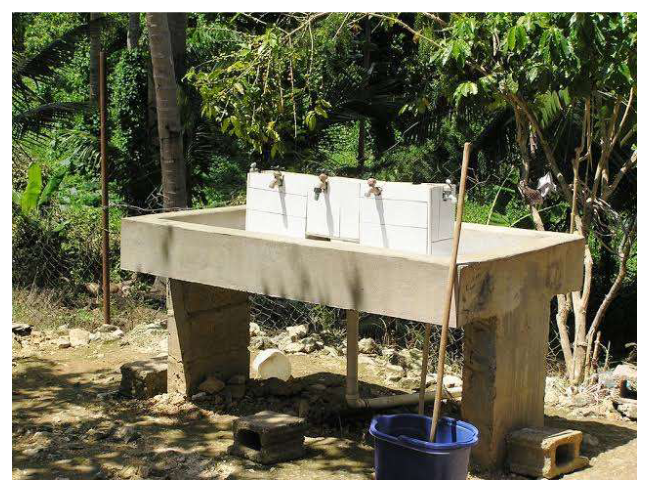
Infection risks at a school wash basin
Shown below is a picture of a wash basin in a primary school. In the space provided in the answer booklet, list down ten various problems related to the possibility of a viral infection like COVID-19 spreading in the school. (5 marks) Identify three problems that you consider to be the most important and clearly illustrate them. You will be evaluated for: 1. Quality and diversity of your observation 2. Analytical skills 3. Communication
CEED 2021 paper
- Drawing 30 min
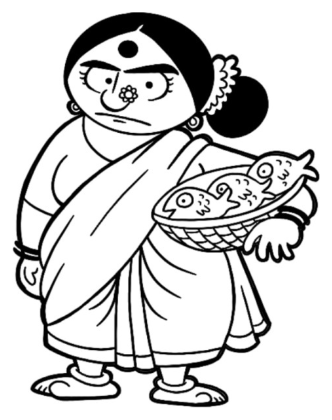
Gouri the fisherwoman, in two moods
Gouri is a fisherwoman from Versova, Mumbai. She sells fish at the same spot everyday on a dusty pavement along the main road. She gets upset and angry when someone takes her spot. She doesn’t like it when customers bargain with her. Given the character design of Gouri as above, sketch the following: 1. Gouri sitting at her spot and impatiently waiting for customers. She uses a towel to chase away the flies; she hates them sitting on the fish. (10 marks) 2. Gouri very angry at the customer (Do not draw the customer) (10 marks) Additional Instructions: • Make a line drawing using only pencils. Do not use any kind of colour. • Do not draw the environments. • Do not use any drawing instrument or straight-edges such as a ruler, compass, set-square etc. Evaluation criteria: 1. Ability to keep the character consistent 2. Expression and body gesture of the character 3. Final line quality and finish of the drawing
CEED 2020 paper
- Visual sensitivity 30 min
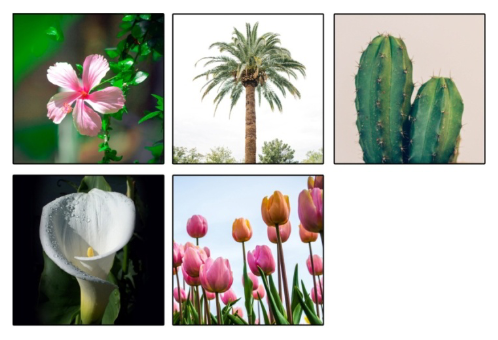
Icons for five plants in one style
Create 2D graphic icons for each of the images given below. All icons should belong to the same design language/style. Use only BLACK colour. Evaluation criteria: 1. Consistency 2. Composition 3. 2D form
CEED 2020 paper
- Form sensitivity 30 min
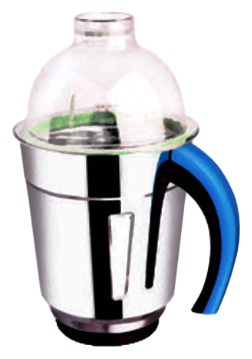
A mixer-grinder body to match the jar
Visualize a form for a mixer-grinder body matching the design language of the given Jar. Sketch and render the body with the jar. Use the same perspective as that of the given Jar. Evaluation Criteria: 1. Originality in the form of the body and its proportion 2. Consistency with the form of the jar. 3. Details like buttons, knobs and indicators. 4. Surface shading 5. Quality of line /strokes
CEED 2020 paper
- Problem identification 30 min
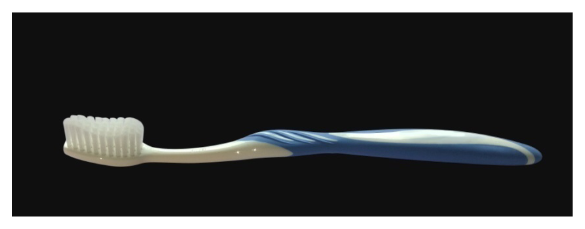
Six problems with a toothbrush
Shown below is the picture of a tooth brush. According to you what are the 6 most important problems that users might face while using such a toothbrush? Illustrate and annotate these problems in the space provided and describe each problem in one sentence. Do not suggest solutions. Evaluation Criteria: 1. Quality and diversity of your observation 2. Analytical skills 3. Communication
CEED 2020 paper
- Product sketch 30 min
A clothes dryer that works with a ceiling fan
Industrial Design (in the exam: answer any ONE of Questions 1–5) During the monsoon season, drying of washed clothes at home takes a long time. The interior of the house is usually very damp. It is observed that people tend to spread the wet clothes on a chair or other furniture below a ceiling fan, to dry them. Such temporary arrangements help them cope with the problem. A leading fan manufacturing company sees a business opportunity. The company approaches you to design a product for drying clothes. The manufacturer proposes to sell this product (which is to be used during monsoons) along with a fan. The manufacturer wants the following objectives to be met in the design: a) The product uses a fan for drying clothes. b) The fan must be integrated with the product during its use in rainy season and must be usable as a “normal fan” during other seasons. c) The product should be foldable and compact for storage. Design the product as per the objectives listed above. 1. Present three ideas of design alternatives through rough sketches. (10 marks) Evaluation Criteria: Quality of creative ideas and neatness of sketches. 2. List ten critical factors (key words only) you will consider for designing. (10 marks) Evaluation Criteria: Understanding of the situation and product use. 3. Select one of your ideas and develop it into a final product. Make a neat sketch of the same. Indicate all the parts, material and features on this sketch. (20 marks) Evaluation Criteria: Sketching quality, details, product features and usability issues.
CEED 2019 paper
- Design aptitude 30 min
A hoarding to cheer India at the 2019 Cricket World Cup
Communication Design (in the exam: answer any ONE of Questions 1–5) Cricket is a popular sport in India. The 12th Cricket World Cup tournament is to be held in England and Wales in 2019. India has already been a champion twice. To win the tournament for a third time, the team needs the support and wishes of a billion Indians. Design a visual campaign for the Indian cricket team to gather support and encouragement from Indians. As part of the campaign, design a 30 feet x 20 feet hoarding to be placed at prominent locations in various cities and towns. Task: 1. Through sketches present three completely different concepts/ideas. (10 marks) Evaluation criteria: Originality and diversity of ideas, creativity, understanding of scale and proportion. 2. Design three slogans for the campaign in English or in any Indian language (with a mention of the language used). (10 marks) Evaluation criteria: Clarity of message and literary creativity. 3. Make a detailed design of one hoarding with slogan. (20 marks) Evaluation criteria: Visualisation, quality of lines, composition, colour combinations and detailing.
CEED 2019 paper
- Storyboard 30 min
Storyboard: the baby, the dog and the table cloth
Animation Design (in the exam: answer any ONE of Questions 1–5) An animation film for children is in the pre-production stage. The film is based on the relationship that develops between a baby and a dog as the baby grows up and the dog gets old. Given below is one scene from the film. The scene begins with a shot of a dog observing a baby. The baby is hungry and crying. Suddenly the baby sees something and stops. On a table, is the baby’s milk bottle (and other stuff). Baby crawls towards the table followed by the curious dog. The baby reaches out and manages to grab a corner of the table cloth and starts pulling. The dog’s expression changes to one of alarm, as he sees the stuff on the table moving towards the edge. He leaps forward and grabs the end of the baby’s diaper. Just as the bottle and the other items start toppling over the edge, he pulls the baby away from danger. The baby is safe, but everything falls on the poor dog. The mother’s scream is heard, “Tommy!! BAD DOG!!” and the dog is seen sheepishly peeping out from under the table cloth, with all the mess around him. Part 1 (30 marks) Illustrate (create storyboard of) the above shots as a series of picture frames (at least 10 frames). You may use more than one frame per shot if you want to. Frames of any proportion are accepted. Evaluation Criteria: Communication of the narrative through the sequential pictures, shot composition (long shot, close up, top angle, low angle, etc.) and perspective. Part 2 (10 marks) Design an image for the poster of the film showing the two characters – the baby and the dog. Your drawings should depict the character and the essence of the film so that it is a good reference for animation and an inspiring image for the animation team. Evaluation criteria: Illustration skills, the attitude and the expressions, and design of the details in the characters (keeping in mind that this will be used for animation). Your style can be realistic or stylised.
CEED 2019 paper
- Design aptitude 30 min
A bicycle navigation device for 12-year-olds
Interaction Design (in the exam: answer any ONE of Questions 1–5) A bicycle manufacturing company has developed a device that will help cyclists find routes and navigate. The device has a colour-display screen (not a touch screen), 7 physical buttons, a speaker, a microphone, a global positioning system (GPS), and a wireless internet connection. The device is water-proof and the display is bright enough to be readable in bright sunlight. The battery of the device gets charged as the cyclist rides the bicycle. Design a version of this device to be mounted on bicycles for 12 year old children. Your task is to do the following: • Create a storyboard in 5 steps showing the user interface that enables the user to specify a new destination that he/she has not been to previously. (10 marks) Evaluation criteria: Appropriateness of the user interface, integration of the hardware and the software and appropriate use of media. • Present a detailed screenshot showing the information design that helps the user to navigate while riding the bicycle. (10 marks) Evaluation criteria: Originality, appropriateness of the information design and appropriate use of media. • Illustrate the shape, size, and position of the screen, the 7 buttons, the speaker, the microphone, and the place where the device will be mounted on the bicycle. (10 marks) Evaluation criteria: Form, originality and rendering quality. • Illustrate a scenario in which the device is used for purposes other than the one mentioned above. (10 marks) Evaluation criteria: Originality, ability to understand the needs and constraints of the users.
CEED 2019 paper
- Product sketch 30 min
A 4-wheeler for people, cattle and goods in hilly regions
Mobility and Vehicle Design (in the exam: answer any ONE of Questions 1–5) There are many local innovative transportation solutions that mostly operate in rural India. These vehicles are flexible to carry large number of people, smaller machine equipments, agro-machinery and even livestock like cattle, goat, etc. These transport systems are neither safe nor comfortable but are indispensible in rural scenarios. At times, these are the only modes of transportation available. You are expected to think about the context, the target users (needs and expectations), and the purpose of the vehicle, along with aesthetic and safety considerations. Your observations and insights should lead to the development of original solutions. You are free to choose one concept over others, develop the final rendering and detail the key features of the final concept. Task: Design a context sensitive, safe, workable and pleasing 4-wheeler vehicle for hilly regions that fulfils the following criteria: a) Carrying capacity of at least 6 passengers, including the driver. b) Has a convertible space that can be used to carry at least 1 cattle/small machine/milk cans/fuel drums and a tool kit. If no goods are transported, the space can also be used to take passengers. c) Provides protection with respect to weather conditions (such as sunshades). d) Has provisions for easy maintenance. Present your design proposal as follows: • Create concept explorations through four good quality design sketches that represent unique design insights. (10 marks) Evaluation criteria: Context-sensitivity, identification of problems and challenges, ability to showcase unique design insights, ability to sketch and creation of exploratory concepts. • Draw a neat freehand perspective sketch of the proposed vehicle concept showing the overall form and its features. (10 marks) Evaluation criteria: Ability to sketch an automobile in perspective and detail out the final concept. • Draw a neat rendering of the side elevation of the final concept. (10 marks) Evaluation criteria: Scale, proportion, neatness of the sketch and ability to make a rendering. • Draw an interior sketch highlighting design details and material finishes. (10 marks) Evaluation criteria: Ability to communicate details through sketch and rendering of material finishes.
CEED 2019 paper
- Perspective 30 min
A kitchen interior from a 5½-feet eye level
Sketching (mandatory) Draw a perspective view of a kitchen interior with a stove, kitchen utensils (such as pressure cooker, cooking pans, sauce pans etc.), dining utensils (such as ceramic plates, cups, glasses etc.), a wash basin, storage racks with stored cooking ingredients (such as spices in small plastic bottles), fresh cut vegetables kept beside the stove and at least two kitchen gadgets. Make a freehand perspective drawing of this setup, showing all the elements listed above, as seen from the point of view of a 5 ½ feet tall person. Evaluation criteria: a) Quality of composition. b) Observation and drawing skills. c) Sense of perspective. d) Scale and relative proportions. e) Use of light, shade and surface finish. Note: • Use only pencils. • Do not use any drawing instrument such as a ruler, compass, set-square etc. • Do not use any kind of colour.
CEED 2019 paper
- Creativity 30 min
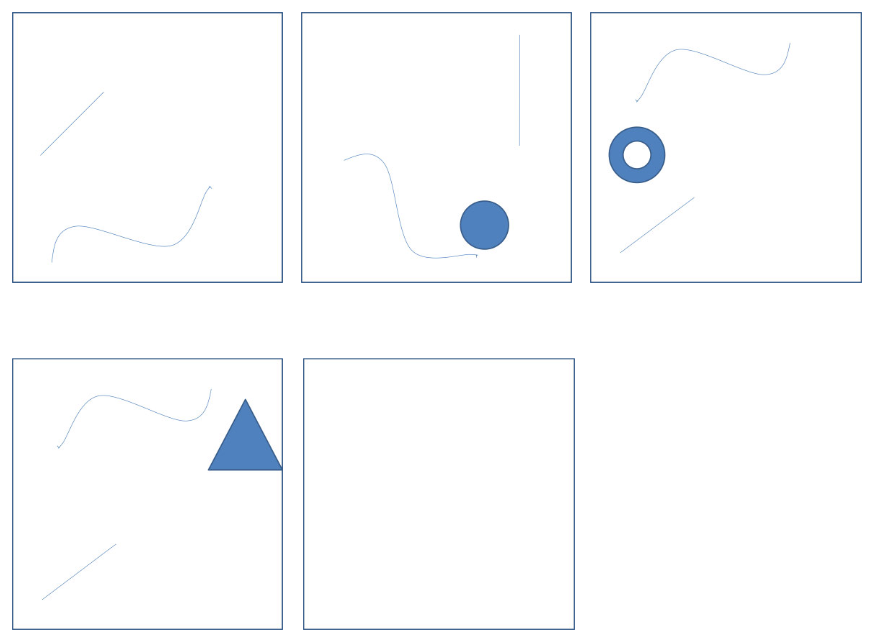
Complete the elements in five frames
Creativity (mandatory) Imagination is the power of the mind. Some visual elements can come together to create a bigger picture. Observe the visual elements that you see in the boxes. Complete the visual elements based on your imagination. It may be a character, a product, a landscape, etc. Using the given elements complete the first four frames to reflect what you imagined. Choose ANY THREE ELEMENTS given in the first four frames, and complete the fifth frame. Sketch only within the boundaries of the boxes. Evaluation criteria: Originality and diversity of your ideas, clarity and neatness of your sketches. (4 marks for each frame)
CEED 2019 paper
- Visual sensitivity 30 min
Complete the S-shaped motif
Visualization (mandatory) Shown below is a part of a “S shaped motif”. Dotted lines indicate the incomplete part of the motif. Visualize the remaining motif and draw the complete motif with a height of 15 cm. DO NOT draw the dotted lines. Evaluation criteria: • Faithful reproduction of the given part of the motif in the required size. (5 Marks) • Consistency with the existing visual language, harmony, and balance in the imagined part of the motif. (10 Marks) • Rendering quality of the final form. (5 Marks)
CEED 2019 paper

- Product sketch 30 min
A one-handed aid for opening a milk pouch
Industrial Design (in the exam: answer any ONE of Questions 1–5) Mr. Chatterjee a right-handed person, recently met with an accident and had to get his right hand amputated. He lives alone and therefore finds it difficult to perform everyday activities. Every morning a standard 500 ml milk pouch is delivered to his residence. One of the challenges he faces is to cut open the pouch and pour the milk into a utensil to heat the milk. Design a product that can aid him to perform the following operations with ease: • Lifting and supporting the pouch • Cutting the pouch • Pouring the milk without spilling • Discarding the empty pouch Present your design proposal with: A. Neat free hand sketches showing the overall form and its features B. Sketches illustrating the usage scenario C. Indicators of materials and processes used in manufacturing D. A brief note articulating your design decisions (max 100 words) Evaluation criteria: User centric design considerations, feasibility and overall effectiveness of your design solution, appropriateness of materials to be used in the manufacturing, originality of concepts, attention to details, design sensitivity and aesthetics, quality of presentation.
CEED 2018 paper
- Design aptitude 30 min
Book cover, spine and back: The Art of Optical Illusion
Communication Design (in the exam: answer any ONE of Questions 1–5) An optical illusion (also called visual illusion) can use colour, light and patterns to create images that can deceive our brains. Information gathered by the eye is processed by the brain, creating a perception that does not match the actual image. Akihito Yujumari is an established artist and author and is releasing his 25th book which documents the greatest optical illusions of the world. He has commissioned you to design the cover for his book. Following are the details of the book: • Title of the book: The Art of Optical Illusion • Author: Akihito Yujumari • Paperback: 312 pages • Publisher: Square Book Publishers • Language: English • ISBN-13: 93-34567898765 (with barcode) • Book dimensions: 22.9 x 2.2 x 25.4 cm You are required to do the following: A. Design the front cover for the book that includes the author name and the title of the book. B. Design a spine for the book that includes the title of the book, the name of the author and the publisher’s logo and name. C. Design a back cover for the book that includes the ISBN number with the barcode and the following paragraph about book: “This intriguing collection contains more than 275 optical illusions that appear to change before your eyes. Akihito Yujumari has carefully selected every type of optical illusion, which intrigues the mind and delights the eye, along with notes about the science behind each illusion.” Evaluation criteria: Ability to understand the design brief, originality and creativity of ideas, clarity of thought, neatness and effectiveness of presentation, design sensitivity and attention to details.
CEED 2018 paper
- Storyboard 30 min
Storyboard: the crow, the man and the biscuits
Animation Design (in the exam: answer any ONE of Questions 1–5) An animation film for children is in the pre-production stage. The film is based on the relationship between a crow and a man. Given below is one scene from the film: The man is about to have breakfast in the garden. On the table are a cup of tea and a plate of biscuits. There is a crow on a tree nearby eyeing the biscuits. Meanwhile, the man gets a phone call. He gets up and starts walking back and forth while talking on the phone. Seeing his chance, the crow swoops down and lands on the table. The man notices the crow about to go for the biscuits and shoos him away. He finishes his call and sits down for breakfast. The man looks up at the crow cawing insistently and feels sorry for the crow. He throws a biscuit in the air. The crow flies and catches the biscuit midair. The crow and the man are happy! Part 1 Illustrate (create a storyboard of) the above shots as a series of picture frames (at least 10 frames). You may use more than one frame per shot if you want to. (The paper shows the approximate frame shape: a landscape rectangle, roughly 16:9.) Evaluation criteria: Communication of the narrative through sequential pictures, shot composition (long shot, close up, top angle, low angle etc) and perspective. Part 2 Design an image for the poster of the film showing the two characters - the man and the crow. Your drawings should depict the character so that it is a good reference for animation. Evaluation criteria: Illustration skills, the attitude and the expressions and design of details in the characters (keeping in mind that this will be used for animation). Your style can be realistic or stylised.
CEED 2018 paper
- Design aptitude 30 min
A pregnancy-record app for ASHA health workers
Interaction Design (in the exam: answer any ONE of Questions 1–5) ASHA workers are local women in the villages who are trained as health educators and monitors. One key function that they do is monitor and maintain the health record of pregnant women in the village. Currently they maintain records using booklets. Now that every ASHA worker has a smart phone of her own and most villages have mobile networks, the ministry of health has decided to create a smart phone application to maintain the records. This is expected to reduce the errors in digitising data, improve the speed with which the data reaches the government, and enable better monitoring of health outcomes. Consider the following scenario: 1. Amruta is an ASHA worker. She knows that Parvati has been pregnant since 6 months. She visits Parvati’s home and opens the smartphone application. Parvati has already been registered in the database on Amruta’s phone. Amruta retrieves Parvati’s records. 2. The records include demographic information about Parvati such as name, age, existing children etc. as well as the earlier recorded pregnancy information such as the date of last menstrual period (LMP), the age of the foetus, the expected date of delivery, and data over the last six months for weight, blood sugar and blood pressure. 3. The ASHA worker then measures Parvati’s current weight, blood sugar and blood pressure and enters this data in the application. 4. The application informs Amruta that Parvati’s weight gain is not enough and her blood pressure is high. The ASHA worker then advises Parvati to visit the nearest Public Health Office at the earliest for consultation. Do the following: A. Add a step of your choice to the above scenario. B. Draw the information architecture of an application that will support the scenario. (Information architecture shows how the information is structured and how the screens are interconnected in the application). Indicate where each of the above steps (1, 2, 3 and 4) happen in your information architecture. C. Design FOUR screens of the application in detail. Show the layout of the screens and detail out design elements such as the widgets and the information graphics used. D. Design icons for the application itself, and for depicting age of foetus, weight, blood sugar and blood pressure in the application. Draw each icon in size 5 cm by 5 cm. Evaluation criteria: Originality, usability and appropriateness of the solution, the logic and flow in the architecture, ability to understand the needs and constraints of the users, quality of the presentation.
CEED 2018 paper
- Product sketch 30 min
A 2-wheeler that doubles as a book kiosk
Mobility and Vehicle Design (in the exam: answer any ONE of Questions 1–5) A roadside bookseller wants to buy a new 2-wheeler that can also serve as a book display kiosk. He wants to use it as a kiosk during the day, but in the evenings or on the weekends, he wants to take his family members out for trips. Design a new 2-wheeler solution that can enable him to perform the following functions: • Travel from home to his workplace or crowded market • Set up the kiosk for selling 100 books • Store the books back and fold the kiosk back safely and securely • Go out with family on the weekend You are expected to think about the context, the target user (his needs and expectations) and the purpose of the vehicle. Your observations and insights should lead to development of unique concepts. You may choose one concept over others, develop the final rendering and detail the key features of the final concept. Present your design proposal as follows: A. Identify with sketches at least five distinct factors essential in designing such a solution. B. Draw a neat side elevation sketch of the proposed vehicle. C. Draw a neat freehand perspective sketch showing the overall form and its features. D. Highlight the design detailing and indicate suitable materials wherever necessary. Evaluation criteria: Design insights leading to novel ideas, concept exploration through good quality design sketches, presentation of the final concept through rendering, detailing and indication of appropriate materials used.
CEED 2018 paper
- Perspective 30 min
The room after the axe fell on the table
Sketching (mandatory) A room of 10 ft × 10 ft dimensions has a table of 5 ft × 4 ft kept in the centre. On the table there is a match box, a watermelon cut into 2 halves and a glass of water. A person with an axe enters the room and switches on the light. With a harsh blow of the axe he breaks the table into two and leaves the room with his axe, leaving the light on. Choose a point of view and draw a freehand perspective drawing of this scene after the person has left. You may use any medium of your choice. Evaluation criteria: Perspective, light, shade and shadow, textures, quality of lines, scale and proportion in the composition.
CEED 2018 paper
- Creativity 30 min
Five uses for a tyre, a bottle, a bat and a bucket together
Creativity (mandatory) Imagine you are provided with a tyre, a plastic bottle, a cricket bat and a bucket. Illustrate five DIFFERENT creative ideas to use these objects in a combination at your home or a public place. You are required to use all the objects in each idea. You may use the objects more than once, change their scales, and proportions. Evaluation criteria: Originality and diversity of your ideas and clarity of your sketches.
CEED 2018 paper
- Visual sensitivity 30 min
Draw a lower-case “d” in the font of “Flows”
Visualization (mandatory) The image given below shows a word written in a particular font. Visualize and draw the letter “d” (lower-case letter d) from the same font. The height of the letter should be 15 cm. Evaluation criteria: Consistency with the existing letters and quality of rendering.
CEED 2018 paper

- Product sketch 30 min
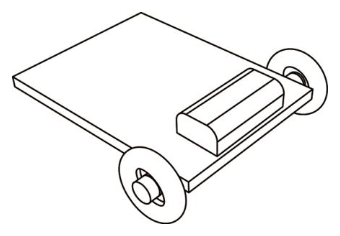
A motorised hospital platform: three uses, one developed
Industrial Design (in the exam: answer any ONE of Questions 1–5) You are provided with a base (chassis) of 100 cm x 75 cm as indicated below. It has: • an inbuilt motor and battery-charger system • capacity to carry maximum load of 200 kg (apart from its own weight) • a maximum speed limit of 5km/hr You are free to add other parts and accessories to it in order to make it a complete and stable product. A. Using this platform, imagine and sketch 3 ideas for its use in a hospital environment. B. Further, develop any one idea as a concept for actual implementation and: • List down 10 critical factors you will consider in your design. • Sketch and explain your concept for its functional details, features and usage. • Suggest/indicate the materials and processes to manufacture the product. • Write a brief note explaining the concept and list the design decisions taken. Evaluation criteria: Critical thinking, identification of user needs and understanding of the context; problem solving and appropriateness of the solution; ability to explain details and features, sketching, presentation and articulation; knowledge of materials and processes.
CEED 2017 paper
- Design aptitude 30 min
A malaria awareness poster for the village of Shaaradapur
Communication Design (in the exam: answer any ONE of Questions 1–5) Shaaradapur is an Indian village. It has a multi-lingual, low-literate population. There is a lack of awareness on maintaining health and hygiene. This results in an outbreak of malaria. Malaria is a mosquito-borne disease and its symptoms include fever, headache, vomiting and fatigue. If left untreated, malaria can be life threatening. So it is important that timely diagnosis and treatment are done under a trained medical practitioner at the government hospital in the village. Malaria can be prevented with mosquito control measures like draining stagnant water and spraying insecticides. Mosquito bites could also be avoided by using mosquito nets and insect repellents. • Design a poster for villagers with the above information on malaria to be displayed prominently at a public place. This poster has to be specific to this village and should communicate (a) the seriousness, (b) the symptoms, (c) the actions to be taken and (d) the prevention of malaria. • Select an ideal location in the village for this poster and (a) Sketch to illustrate how it will be displayed at the location (b) Write 5 sentences justifying your selection of the location, size and strategy in the way it is displayed. Evaluation Criteria: Ability to understand the design brief, clarity of thought, articulation, creativity and presentation.
CEED 2017 paper
- Storyboard 30 min
Storyboard: Priya, her cat and the bird
Animation Design (in the exam: answer any ONE of Questions 1–5) An animation film for 5 to 12 year old children is in pre-production stage. The film is based on a 10 year old girl Priya and her cat. This is a shot breakdown of a sequence from the film. Shot 1 - It was such a bright and beautiful day that 10 year old Priya decided to play with her cat in the garden. Shot 2 - All of a sudden, the cat’s attention is diverted by a little bird singing on a tree. Shot 3 - The cat quickly climbed up the tree and walked stealthily on the branch on which the bird is perched. Shot 4 - Priya anxiously watched from below. Shot 5 - As the cat approached the bird, the branch broke and the bird flew away. Shot 6 - Shocked, Priya quickly ran to catch the falling cat. Shot 7 - Priya tripped and fell. Shot 8 - Terrified, she looked up to see that the falling cat thankfully landed on its feet. Shot 9 - Priya picked up the cat and scolded her. Shot 10 - She then gave the cat a warm hug. The cat meowed back to her with a big smile. Part 1 Illustrate (create a storyboard of) the above shots as a series of picture frames. You may use more than one frame per shot if you want to. (The paper shows the approximate frame shape: a wide landscape rectangle, about 2.3 : 1.) Evaluation criteria: Communication of the narrative through sequential pictures, shot composition and perspective. Part 2 Model Sheets – Design the characters Priya, the cat and the bird. Your drawings should depict the character so that it is a good reference for animation. It should also contain possible attitudes and expressions as may be needed by the film. Evaluation criteria: Illustration skills and design of details in the character (keeping in mind that this will be used for animation). Your style can be realistic or stylised.
CEED 2017 paper
- Design aptitude 30 min
A driving-licence information kiosk for the RTO lobby
Interaction Design (in the exam: answer any ONE of Questions 1–5) Every day, around 500 people visit the city Regional Transport Office (RTO) for getting a driving licence. Some of these people are illiterate. The RTO is short on staff and struggles to cater to all these people. To get a licence the user needs to fill a form, take an objective-type test, and submit copies of age proof, address proof, a phone number, finger prints and a photograph. After verification of this, the user is issued a learner’s licence. If the user has had a learner’s licence for a month, he/she may apply for a permanent licence. In that case, the user is given a choice of a date for a driving test, after which the licence is issued. The RTO has decided to put up an interactive public information system in the lobby of its office to ease the process. The primary target audiences for this system are: 1. Individuals who come to issue a learner’s driving licence (typically 18–20 years old) and 2. Individuals who come to issue a permanent driving licence (typically 18–20 years old). Based on this information, write in about 20 words the needs of different types of users and information that the system should provide. State the assumptions you are making about the availability of technology and information. • Draw a sketch of the lobby to illustrate the physical location of the system and how users would interact with it. • Present two scenarios (1) submission of application and (2) getting a licence to illustrate the details of the graphical interface and information flow. Each scenario should highlight specific problems the users might face and show how the system would solve these. Evaluation criteria: Ability to understand the needs of users, originality, the logic and flow in the interface, usability and appropriateness of information, presentation.
CEED 2017 paper
- Product sketch 30 min
An electric two-wheeler taxi for Banaras
Mobility and Vehicle Design (in the exam: answer any ONE of Questions 1–5) A company is planning to introduce an electric two-wheeler taxi in the city of Banaras (Varanasi) for local commuters and pilgrims. Design an electric two wheeler taxi by identifying at least five distinct and essential factors that will make it relevant for the city of Banaras in terms of function and aesthetics. Present your design proposal as follows: • Identify at least five distinct factors essential in designing such a solution. • Draw a neat side elevation sketch of the proposed vehicle. • Draw a neat freehand perspective sketch showing the overall form and its features. • Indicate suitable materials used in manufacturing of the vehicle body. Evaluation criteria: User-centric design considerations, form, feasibility and effectiveness of design solution, quality of sketch, originality and appropriateness of materials.
CEED 2017 paper
- Perspective 30 min
Still life: bottle, glass with spoon, knife and half-eaten apple
Sketching (in the exam: attempt ANY ONE of A or B — this is A) • Do not use any colours. • Use only pencils. • Do not use any drawing instruments such as ruler, compass, set-square etc. Illustrate in perspective a still life composition with a plastic water bottle, a transparent half empty glass of water with a metal spoon inside it, a kitchen knife placed next to a half-eaten apple on a grey ceramic plate. Evaluation criteria: Realistic drawing, proportions, quality of surface texture, shading, perspective and composition.
CEED 2017 paper
- Drawing 30 min
A dog chases the banana seller; a kid on a tricycle watches
Sketching (in the exam: attempt ANY ONE of A or B — this is B) • Do not use any colours. • Use only pencils. • Do not use any drawing instruments such as ruler, compass, set-square etc. Illustrate this scene. A dog chases a fruit seller carrying a basket full of bananas. A kid on a tricycle watches. Evaluation criteria: Drawing, perspective, proportions and composition. Figures may be realistic or stylised.
CEED 2017 paper
- Creativity 30 min
Five uses for a helmet, other than as headgear
Creativity A helmet is used to prevent head injury in risky situations. Helmets are used in many sports as well as while driving a bike. Describe five DIFFERENT creative ways you can use a helmet other than as a headgear. Sketch your ideas and write a one-line note to describe each idea. Evaluation Criteria: Originality, imagination and presentation.
CEED 2017 paper
- Perspective 30 min
A patient and a doctor at a clinic table
Mandatory A patient is sitting on a chair in front of a doctor at a clinic. A stethoscope, bottles of medicine, a glass of water, a thermometer, a mobile phone, a landline phone and a torch are kept on the table in front of the doctor. Draw a freehand perspective drawing of this setup, showing all the elements listed above, from any point of view. Note: • Use only pencils. • Do not use any drawing instrument such as ruler, compass, set-square etc. • Do not use any kind of colour. You will be evaluated for the overall composition and drawing, perspective, light, shade and shadow, as well as scale and proportion.
CEED 2016 paper
- Creativity 30 min
Five uses for a mind-reading device
Mandatory You are given a magic computer device which can read the human mind and translate the data into text. This data can be stored in various digital media. Create five sketches with brief notes to illustrate five creative uses of this device. You will be evaluated for imagination, creativity, diversity of ideas, originality of ideas and clarity of visual presentation.
CEED 2016 paper
- Product sketch 30 min
A portable solar cooker for construction workers
Optional (Product Design) — in the exam: answer ONE of Questions 4–7 Solar energy is readily available to everyone and there is no reason why we should not harness this for the purpose of cooking. People who keep migrating frequently, such as construction workers who are also economically challenged could particularly benefit from solar energy. Design a solar cooking unit to be used by construction workers. The unit should be easy to assemble, store and transport. It should be able to cook food for a minimum of 20 people at a time. When packed, its dimensions should not exceed 2 ft x 3 ft x 2 ft. 1. Present rough sketches of design alternatives. 2. Present your final design proposal with a neat freehand sketch showing the form. 3. Draw an exploded view of the final product. 4. Indicate the materials and processes used in manufacturing. 5. Support your design with a brief note on the design decisions taken. You will be evaluated for 1. Originality of ideas. 2. Ability to understand the strengths and weaknesses of the user. 3. Appropriateness of materials and processes used and sustainability parameters. 4. Ability to articulate design decisions and effectiveness of presentation.
CEED 2016 paper
- Design aptitude 30 min
A smartphone-based soil tester for farmers
Optional (Interaction Design) — in the exam: answer ONE of Questions 4–7 A manufacturer of smart phones has decided to develop a portable soil tester for farmers in India. The tester measures water content (very low to very high), pH level (alkaline to acidic) and fertilizer content (very low to very high) of the soil. The tester has three probes which are to be inserted into the soil in order to take the readings. In addition to the three probes the device can use components from smart phones. a. Visualize the 3D form of the device. Present the design in the form of sketches/drawings. b. Detail the graphical interface of the device. Present the interface in the form of sketches/drawings. c. Illustrate in detail three typical scenarios of the use of the device. Each scenario should illustrate a unique set of design features of the device. Present the interface and information flow with neat sketches and brief explanatory notes. You will be evaluated for 1. Originality of ideas. 2. Ability to understand the strengths and weaknesses of the user. 3. Logic and flow in the interface, usability and appropriateness of the information. 4. Ability to articulate design decisions and effectiveness of presentation.
CEED 2016 paper
- Storyboard 30 min
Storyboard: The Potter and the Wagher (Gujarati folktale)
Optional (Animation) — in the exam: answer ONE of Questions 4–7 A folktale has to be made into an animation film. Read the story carefully and complete the task given below. The Potter and the Wagher A Gujarati folktale – from Folktales of India (1987) Eds. Brenda E. F. Beck, Peter J. Claus, Praphulladatta Goswami, and Jawaharlal Handoo, University of Chicago Press. p.232 Once upon a time, there were two friends, a potter and a Wagher. The latter was a member of a caste of warriors. The men were neighbours, and their wives were friends as well. These women used to sit and gossip together in their spare time. Now, the potter was strong, tall, and sturdy while the Wagher was very thin. The potter’s wife used to chide the Wagherani (Wagher’s wife) saying, “how can such a thin man hold a spear and a sword? How can he face a powerful foe?” The Wagherani felt bad, but she could say nothing in reply. She knew that her husband was a weakling. One day, the pot-drums thundered and a band of outlaws entered the village to loot and plunder. In fear, the potter tried to hide himself on the verandah of his house. The Wagher, however, picked up his sword and came out of his house at the sound of the warning drums. He saw the potter crouched in a corner while a crowbar lay nearby. The Wagher thus walked into the potter’s house, picked up the crowbar and called the potter’s wife. When she came out of the room in which she was hiding, he told her to watch and see if he was brave or not. Then he took the crowbar and bent it in a circle around her neck to form a collar. Afterwards, he went outside to face the outlaws. He fought bravely and soon drove them from the village. Everything returned to normal in the village. The Wagher and his wife lived peacefully in their house. But the potter’s wife was too ashamed to come to visit anymore. She wanted her husband to go to the Wagher and ask him to free her from the crowbar which still hung around her neck. He refused. One day, full of shame, the potter’s wife finally came to see the Wagherani in person. She was received with courtesy, and the Wagherani soon asked, “Why have you not visited all these days?” “Because I have been busy with my work”, replied the potter woman. “But could you please ask your husband to open this crowbar and free me of my burden?” “Oh, my friend,” replied the Wagherani, “that can’t be done at this time. My husband is inspired with such strength and valour only when the drums thunder and danger is at hand. When that time returns, you will be set free”. “But such things happen once in a lifetime!” lamented the potter’s wife. Create a story board based on the above story. The storyboard must include all the major events in the story. You will be evaluated for 1. Clarity and continuity in story. 2. Plot structure. 3. Visual continuity. 4. Point of view. 5. Character design.
CEED 2016 paper
- Design aptitude 30 min
A symbol and logo for a new IIT in Goa
Optional (Visual Communication) — in the exam: answer ONE of Questions 4–7 The Government of India is starting a new Indian Institute of Technology (IIT) in Goa. IIT is an autonomous institute under the Ministry of Human Resource Development (MHRD) setup to offer world class education in technology. Design a symbol and a logo for this new institute. Symbol is a visual representation of various ideas associated with the Institute. Logo is the manner in which the name of the Institute is depicted. The symbol and the logo will be used in various places including stationery, vehicles, publicity materials, websites, digital media, 3D forms and architecture. They should be usable in black & white and in colour. The design should be visible in various sizes. The design should reflect the following key words: Technology, world class education, research and development, India and Goa. 1. Present rough sketches of three design alternatives with brief notes on each alternative (less than 50 words each). 2. Present the final design proposal with a neat sketch and relevant design specifications. 3. Illustrate with sketches how the symbol and the logo will be used in the stationery and website of the institute. 4. Write a brief note on the final symbol and the logo (less than 50 words). You will be evaluated for 1. Originality of ideas. 2. Ability to understand and reflect the keywords of the design brief. 3. Clarity of thought, ability to articulate design decisions and effectiveness of presentation. 4. Ability to create a visual identity which can be executed effectively across media.
CEED 2016 paper
- Perspective 30 min
A cookery show: pressure cooker on a two-burner stove
Mandatory Imagine a scene from a cookery show. The chef has just placed a pressure cooker on a two-burner gas stove. Draw a freehand perspective drawing of this setup. Note: • Use only pencils • Do not use any drawing instruments, such as ruler, compass, set-square or anything else. • Do not use any kind of colour Pay attention to perspective, light, shade and shadow, quality of lines, as well as scale and proportion in the composition.
CEED 2015 paper
- Creativity 30 min
Two uses for a device that halves the size of things
Mandatory Imagine that you are given a hand held magic device, which can reduce the size of any object by 50%. The reduction in size will remain effective for only three hours. To reduce the size, point the device toward an object and press the button. Illustrate two creative applications of this device. If required, support each application with a brief note of no more than 50 words each. Pay attention to variety, creativity, as well as innovation in the concepts.
CEED 2015 paper
- Creativity 30 min
Three products from a cone, hemisphere, cuboid, cylinder and disc
Mandatory The following objects are available to you – 1 Cone, 1 Hemisphere, 1 Cuboid, 1 Cylinder and 1 Disc. (The paper’s picture of these objects is not in the published PDF.) Imagine 3 interesting products made out of a combination of minimum 3 objects. You can scale the objects to any size and dimension. Represent your ideas with neat sketches and name them. Pay attention to variety, creativity, as well as innovation in the concepts.
CEED 2015 paper
- Storyboard 30 min
Storyboard: the kid, the puppy and the eagle
Optional (Animation Design) — in the exam: answer ANY ONE of Questions 5a to 5d (this is 5c) An animation film for 5 to 12 year old children is in pre-production stage. The film is based on the relationship between a kid (girl/boy) and his/her puppy. This is a shot breakdown of a sequence from the film. Shot 1. A 10 year old kid (girl/boy) and his puppy are playing with a ball in a field. Shot 2. Suddenly s/he notices a huge eagle swooping down on the puppy. Shot 3. The eagle reaches out with its talons (claws), grabs the puppy and flies off. Shot 4. The kid sees the puppy carried away. Shot 5. The kid picks up the ball and throws it at the eagle Shot 6. The ball hits the eagle, and he drops the puppy. Shot 7. The girl/boy is reunited with the puppy, hugs him. Part 1 Illustrate (Create a Storyboard of) the above shots as a series of picture frames. You can use more than one frame per shot if you want. You can choose to make the drawing and then draw the frame on top of it to compose your shot or you can create the frame and then draw inside. Part 2 Draw shot 3 (the eagle reaching out, about to grab the puppy) in detail in a style which is one of the following. Line drawing is sufficient. Detailed rendering and shading can be done if needed. a. Realistic b. Stylised In part 1, pay attention to communication of the narrative through sequential pictures and shot composition. In part 2, pay attention to illustration skills, composition and perspective (if realistic style chosen) or illustration style (if stylized chosen).
CEED 2015 paper
- Product sketch 30 min
A device to carry four water pots over rough ground
Optional (Product Design) — in the exam: answer ANY ONE of Questions 5a to 5d (this is 5a) Women in rural India have to walk a long distance to carry three to four pots filled with drinking water to their homes. This causes a lot of physical strain. Design a device to help women carry four earthen pots of drinking water through uneven terrain. Identify at least five distinct factors essential in this device that will make it relevant for rural India. Present your design proposal with • A neat free hand sketch showing the overall form and its features • Sketches illustrating the usage scenario • Indicators of materials and processes used in manufacturing • A brief note on design decisions taken (max 100 words) Pay attention to user centric design considerations, feasibility and overall effectiveness of design solutions, appropriateness of materials to be used in the manufacturing, originality of concepts as well as quality of presentation.
CEED 2015 paper
- Design aptitude 30 min
An interactive pencil box for students aged 12–15
Optional (Interaction Design) — in the exam: answer ANY ONE of Questions 5a to 5d (this is 5b) An organization has decided to develop an interactive pencil box (a box in which students carry pen, pencils, eraser, ruler etc.) for students of standard 7-10 (approximate age group 12-15 years). The organization hopes that the interactive device would act as a learning aid both inside and outside the classroom for students. Design the interactive pencil box, and illustrate how it will be used by students. a. Visualize the 3D form of the device along with its graphical interface. The visual design and form of the device should appeal to students of this age group. Present this in the form of sketches/drawings. b. State three or more ‘original and innovative’ features of the device which will assist students in their studies. DO NOT describe features available in present day smart devices (e.g. calculator, dictionary, e-book reader etc.). Describe the features with neat sketches and explanatory notes. c. Illustrate in detail one of the above concepts. Explain how the device would assist students in learning a topic related to the history of India. Present the interface and information flow of the device, and describe along with visuals, the set of interactions that will be presented to the student during the complete learning cycle. Pay attention to logic and flow in the Interface, usability and appropriateness of the information, originality of concepts and overall effectiveness of the design as well as quality of presentation.
CEED 2015 paper
- Design aptitude 30 min
‘Suraksha’: a gas-cylinder safety booklet and logo
Optional (Visual Communication) — in the exam: answer ANY ONE of Questions 5a to 5d (this is 5d) Indian government is initiating a safety and awareness campaign for preventing accidents at home called ‘Suraksha’ (Safety). ‘Suraksha’ aims at bringing awareness amongst citizens regarding safety with household appliances. Support the campaign by designing a section of the information booklet on gas cylinders. Complete the following tasks for the same. a. Design a logo for the campaign title ‘Suraksha’. b. Identify four problems that users face while changing domestic gas cylinders. Illustrate the problems in thumbnail sketches. c. Show three different illustration styles for visually representing one of the problems stated by you earlier. Create three thumbnail sketches to represent your ideas. d. Design a layout of the information booklet in neat pencil sketches. Size of the booklet is 6 x 6 inches. Depict the final illustration/s and its sequence keeping in mind problems in comprehension as well as safety hazards involved in handling gas cylinders. Use text minimally or preferably not at all. Select appropriate views and representation styles to illustrate objects as well as actions. Pay attention to the quality of visual renderings, appropriate selection of views of the object and actions, effectiveness of presentation in minimal space, and elements and clarity in the structure and sequencing of information.
CEED 2015 paper
- Perspective 30 min
A person next to a scooter parked on the street
Sketching (mandatory; in the exam this was one of two choices) Draw a freehand perspective drawing of a person standing next to a scooter parked on the street. Note: - DO NOT USE ANY DRAWING INSTRUMENTS LIKE RULER, COMPASS, SET-SQUARE etc. - DO NOT USE ANY FORM OF COLOUR - USE ONLY PENCILS Evaluation Criteria: Abilities in perspective drawing Light and shade and shadow Quality of lines Sense of scale and proportions Sense of composition
CEED 2014 paper
- Perspective 30 min
A person opening the refrigerator door in the kitchen
Sketching (mandatory; in the exam this was one of two choices) Draw a freehand perspective drawing of a person opening the refrigerator door in the kitchen. Note: - DO NOT USE ANY DRAWING INSTRUMENTS LIKE RULER, COMPASS, SET-SQUARE etc. - DO NOT USE ANY FORM OF COLOUR - USE ONLY PENCILS Evaluation Criteria: Abilities in perspective drawing Light and shade and shadow Quality of lines Sense of scale and proportions Sense of composition
CEED 2014 paper
- Creativity 30 min
Three uses for an umbrella beyond rain and sun
Creativity and Imagination (mandatory) Umbrellas are used mainly during the rainy season and usually remain unused during the rest of the year. Creatively generate 3 alternative uses of the umbrella other than just as protection from rain or sunshine. Illustrate your ideas in the form of sketches with short descriptions. Evaluation Criteria: Originality of the ideas Creativity and Innovation Imagination and Ideation
CEED 2014 paper
- Design aptitude 30 min
Online ticket booking for the ‘Navrang Chitrapat’ cinema
Optional (Visual Communication and Interaction) — in the exam: attempt ONE of Questions 4, 5 and 6 Design a graphical user interface (GUI) for a website of a movie theatre complex named ‘Navrang Chitrapat’ for booking movie tickets online. The complex has 3 theatres with each theatre screening a different film, three shows per day. Present your design solutions in the form of screen shots. Draw minimum of six screen shots explaining the booking procedure in a sequence. Support your design solution with a brief note on the design decisions. The web interface should present the following information to the user: • Basic Information about the theatre complex • Name of film • Date • Time • Availability of ticket • Price of tickets • Payment Options • Confirmation of Booking Evaluation Criteria: Usability of the Interface Structure and clarity of Information Visual quality of icons and overall screens Logic of design decisions
CEED 2014 paper
- Storyboard 30 min
Storyboard: a bag snatching on a railway platform
Optional (Animation Design) — in the exam: attempt ONE of Questions 4, 5 and 6 A woman is walking on a crowded railway platform. A train pulls in and people alight. A man suddenly comes up behind the woman, snatches her bag and runs away. The woman shouts for help. A policeman standing near a vendor’s cart looks up and immediately gives chase. Two women standing by, try to console the shocked woman. The thief runs towards the stairs to the overhead bridge. The policeman smartly throws his baton at the thief’s legs. The thief stumbles and comes crashing down on the platform. A group of men pounce on the thief and catch him. They retrieve the bag as the cop reaches and pins the thief down. A loud cheer goes up amongst the watching public. Assume you are one of the characters in this story. Visually illustrate the story as you see it unfolding in front of you through a sequence of minimum 20 frames. Tell this story from the point of view of any one of the following characters: - The woman or - The thief or - The policeman or - A bystander standing on the platform Evaluation criteria Visual narrative structure Quality of illustrations Character and Environment development
CEED 2014 paper
- Product sketch 30 min
Roadside bins that sort waste
Optional (Product Design) — in the exam: attempt ONE of Questions 4, 5 and 6 Present road side waste containers are normally dirty, stinking and spilling over. Design roadside waste container bin(s) to be used in public places for segregation of the following categories of waste. • Different types of packaging • Wet and Dry organic waste • Organic food waste • All other kinds of leftover. The container(s) should be rugged, movable so that the waste can be transported for periodic disposal. Present your design proposal a. With a neat freehand sketch showing the form. b. An exploded view drawing c. Indicate the materials and processes used in manufacturing. d. Support your design with a brief note on the design decisions taken. Evaluation criteria Identification of problem areas Design insights and creativity User Centric Design considerations Sustainability parameters recycle, reduce, regenerate, refuse Ability to meet specific requirements of hygiene, portability and Indian conditions Originality of ideas Appropriateness of materials to be used in the manufacturing of the final product.
CEED 2014 paper
- Drawing 30 min
An apple and six bananas on a dinner plate
Mandatory Create a freehand sketch of an apple and a bunch of six bananas placed on a dinner plate. The final drawing is to be done freehand using only pencil. You may use shading to create a realistic three dimensional feel. Do not use any colour. Do not use any drawing instrument like ruler, set square, compass etc. Evaluation criteria: Perspective Light, shade and shadow Quality of lines Composition Three Dimensional Quality
CEED 2013 paper
- Creativity 30 min
Five uses for a liquid that makes things invisible
Mandatory You are given a special magic liquid. You can make anything invisible by spraying this liquid on it. Describe five instances where you will use this liquid in your daily life. Use a sketch and a brief note (less than 20 words) to describe each answer. Evaluation criteria: Originality of ideas. Ability to imagine. Sense of humor
CEED 2013 paper
- Problem identification 30 min
Five problems in a college canteen
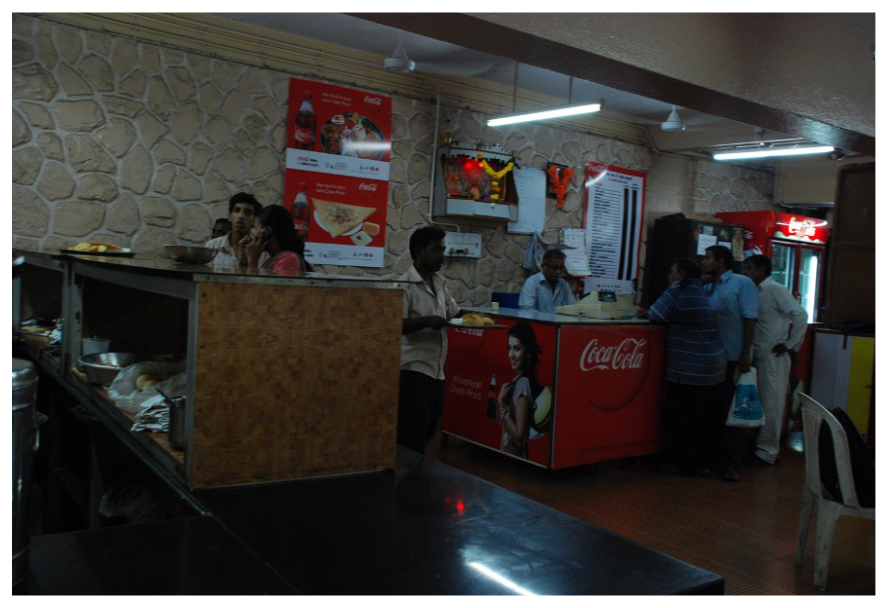
Mandatory Below is an image of a college canteen in India. Identify five problems in this scenario. Briefly describe the problems (in less than 20 words each). Evaluation criteria: Identification of unique problem. Ability to understand the problems. Design Sensitivity.
CEED 2013 paper
- Product sketch 30 min
A manual floor mop that reaches crevices and under furniture
Optional (Product Design) — in the exam: attempt any one of three optional questions In case of day to day activity in a household, one tedious activity is mopping of the floors. A normal mop cannot reach all the crevices and under the furniture. Design a manually operated floor mop for domestic use. 1. Identify at least five distinct factors essential for designing a mop that can be used for domestic purpose. 2. Generate three distinct concepts through pencil sketches based on the factors identified above. Present these pencil sketches along with brief notes (not more than 15 words). 3. Create your final concept and present this through drawings, showing the overall form and design of its features. Indicate materials to be used for various parts of the mop. Evaluation criteria: Identification of distinct factors. Originality of your alternate concepts. Appropriateness of your final solution. Appropriateness of choice of materials. Quality of presentation
CEED 2013 paper
- Design aptitude 30 min
Medicine dosage instructions without words
Optional (Visual Communication) — in the exam: attempt any one of three optional questions The following instructions are required to be printed on a medicine packet. Represent visually the given instructions without using any text. 1. One tablet before breakfast at 7:00 AM. 2. One tablet after lunch at 2:00 PM. 3. One and half tablets after dinner at 9:00 PM. 4. Not to be taken by pregnant women Size of the medicine packet is as follows: Height: 50mm, Width 200mm, Depth: 50mm. Your final artwork (total ALL four visuals) should fit into the following size: Height: 40mm, Width 160mm Explain your design solution in not more than 20 words. Evaluation criteria: Ability to communicate clearly using visuals without use of text. Clarity of visuals. Quality of renderings. Overall effectiveness of final design solution.
CEED 2013 paper
- Storyboard 30 min
The autobiography of a crow, in 8 frames
Optional (Animation Design) — in the exam: attempt any one of three optional questions The crow is the most common bird that we get to see in India. One cannot miss noticing the innumerable deep rooted associations that the crow has in Indian society. Imagine that you are a crow and narrate your autobiography. 1. Write your story in 5 sentences. 2. Make 3 sketches of the crow in your story in various poses/moods/expressions. 3. Design a storyboard to describe your story in 8 frames. Evaluation criteria: Ability to design an interesting character and story. Quality and finish of drawings. Originality of the story.
CEED 2013 paper
- Drawing 30 min
A 5-year-old boy sitting on a chair
Drawing Ability (in the exam: answer ANY ONE of two drawings) Draw a 5 year old boy sitting on a chair. Instructions: The final drawing is to be done free hand using only a pencil. Do not use any colour. You may use shading to give a realistic three dimensional feel. Do not use any drawing instrument like ruler, set square, compass etc. Evaluation criteria: • Composition • Perspective • Light, shade and shadow • Quality of lines
CEED 2012 paper
- Perspective 30 min
Your favourite car in three-quarter view
Drawing Ability (in the exam: answer ANY ONE of two drawings) Draw your favorite car in proper perspective in three-quarter view. Instructions: The final drawing is to be done free hand using only a pencil. Do not use any colour. You may use shading to give a realistic three dimensional feel. Do not use any drawing instrument like ruler, set square, compass etc. Evaluation criteria: • Composition • Perspective • Light, shade and shadow • Quality of lines
CEED 2012 paper
- Storyboard 30 min
A five-frame comic strip about a dengue mosquito
Design Problem Solving (in the exam: answer ANY ONE of [A], [B] or [C] — this is [C]) The issue of Dengue fever claiming human life is becoming a concern. Create an imaginary female mosquito character spreading dengue fever. Draw an interesting comic strip of five key frames involving the character created. You may add characters to complement the story. a. Write an abstract of the story in five lines. b. Make three alternative sketches for each of the characters. c. Represent your story board in five frames. You may use colours if necessary. Evaluation criteria: • Abstract of the story • Appropriateness of the characters • Originality of story board • Quality of presentation
CEED 2012 paper
- Product sketch 30 min
A bottle-cap opener for the elderly
Design Problem Solving (in the exam: answer ANY ONE of [A], [B] or [C] — this is [A]) Caps on glass bottles used for pickles and jam are often difficult to open for senior citizens. Many of these caps are screwed on to the bottles. Design an opener for screwable bottle caps, to be used by the elderly. a. Identify at least five distinct factors essential for designing a cap opener for bottles and jars that can be used by the elderly. Write briefly. b. Generate three distinct concepts through pencil sketches based on the factors identified above. Present these pencil sketches along with brief notes (if necessary). c. Create your final concept and present this through drawing, showing the overall form and design of its features. Mention materials to be used for production of the opener and reasons for choosing the same. Evaluation criteria: • Identification of distinct factors • Originality of your alternate concepts • Appropriateness of your final solution • Appropriateness of choice of materials • Quality of your presentation
CEED 2012 paper
- Design aptitude 30 min
An anti-corruption awareness poster
Design Problem Solving (in the exam: answer ANY ONE of [A], [B] or [C] — this is [B]) The issue of corruption is becoming a big concern and people are agitating over the issue. It is a social responsibility of a designer to create awareness of this issue amongst common people so that they are properly informed about this, through visual media. Your task is to design an anti-corruption awareness poster to capture the essence of the issue. You can make use of text, graphics or both. a. Identify at least five distinct factors essential for representing the issue of corruption. Write briefly. b. Generate three distinct concepts through pencil sketches based on the factors identified above. Present these pencil sketches along with brief notes. c. Create your final concept of the poster and present this through drawing. You may use colours if necessary. Evaluation criteria: • Identification of distinct factors • Originality of your alternate concepts • Appropriateness of your final Poster • Clarity of your Poster in representing the issue of corruption
CEED 2012 paper
- Visual sensitivity 30 min
Draw one of the two identical pieces of this cube
Visual Perception and Design Sensitivity (Q1.1) The drawing below shows a cube made of two identical pieces. Draw one of these pieces in 3 dimensions.
CEED 2011 paper
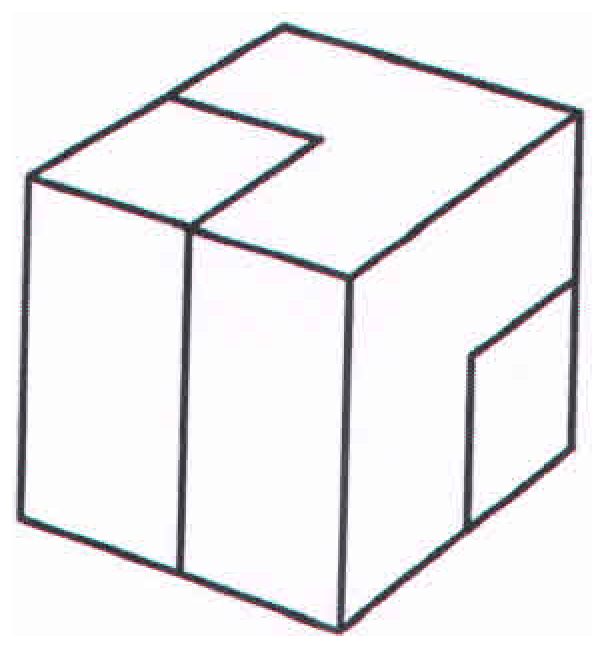
- Visual sensitivity 30 min
Colour the same car to look masculine, then feminine
Visual Perception and Design Sensitivity (Q1.7) Given below are two images of the same car. Use minimum of two colours in each car to depict the following two expressions – Masculine and Feminine.
CEED 2011 paper
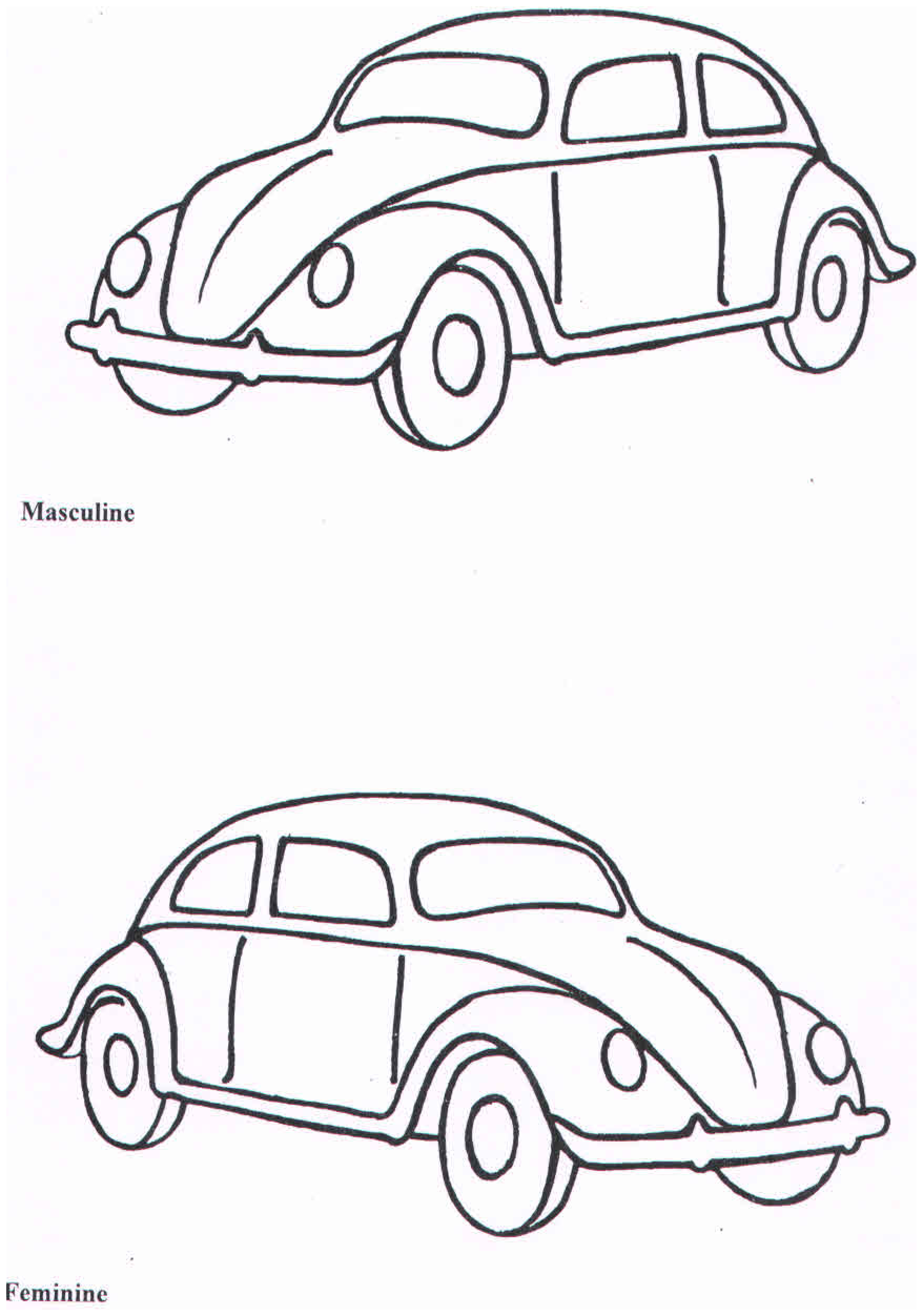
- Creativity 30 min
Four different forms from one curved line
Visual Perception and Design Sensitivity (Q1.4) Below is a line (with an example of one form made from it). Visualize and Illustrate 4 different forms by making use of the line.
CEED 2011 paper
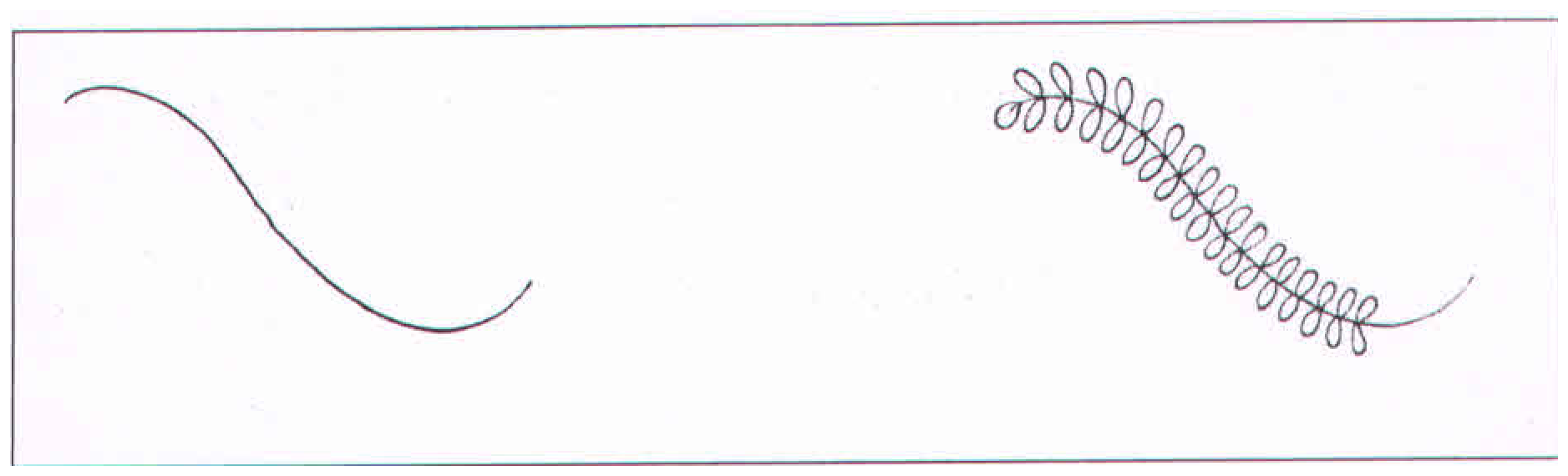
- Perspective 30 min
An open book and a lit table lamp
Drawing Abilities and Skills Illustrate in perspective, a composition of an Open Book and a Table Lamp, with light switched on, placed on a flat surface. The drawing needs to be done by Freehand using black pencils (Do not use any drawing instruments or colour pencils) Evaluation criteria: 1. Composition and correctness of perspective [5 marks] 2. Correctness of light and shadow [5 marks] 3. Quality of lines [5 marks]
CEED 2011 paper
- Creativity 30 min
Five products from hemispheres, cubes, cylinders and wires
Creativity The following objects are available to you - 2 hemispheres, 2 cubes, 2 cylinders and 2 wires (flexible rods) as shown below. Imagine 5 interesting products made out of a combination of all 8 objects. You can scale the objects to any size or dimension. Represent your ideas with neat sketches, name them along with brief notes (if necessary). Evaluation criteria: Originality of Ideas
CEED 2011 paper
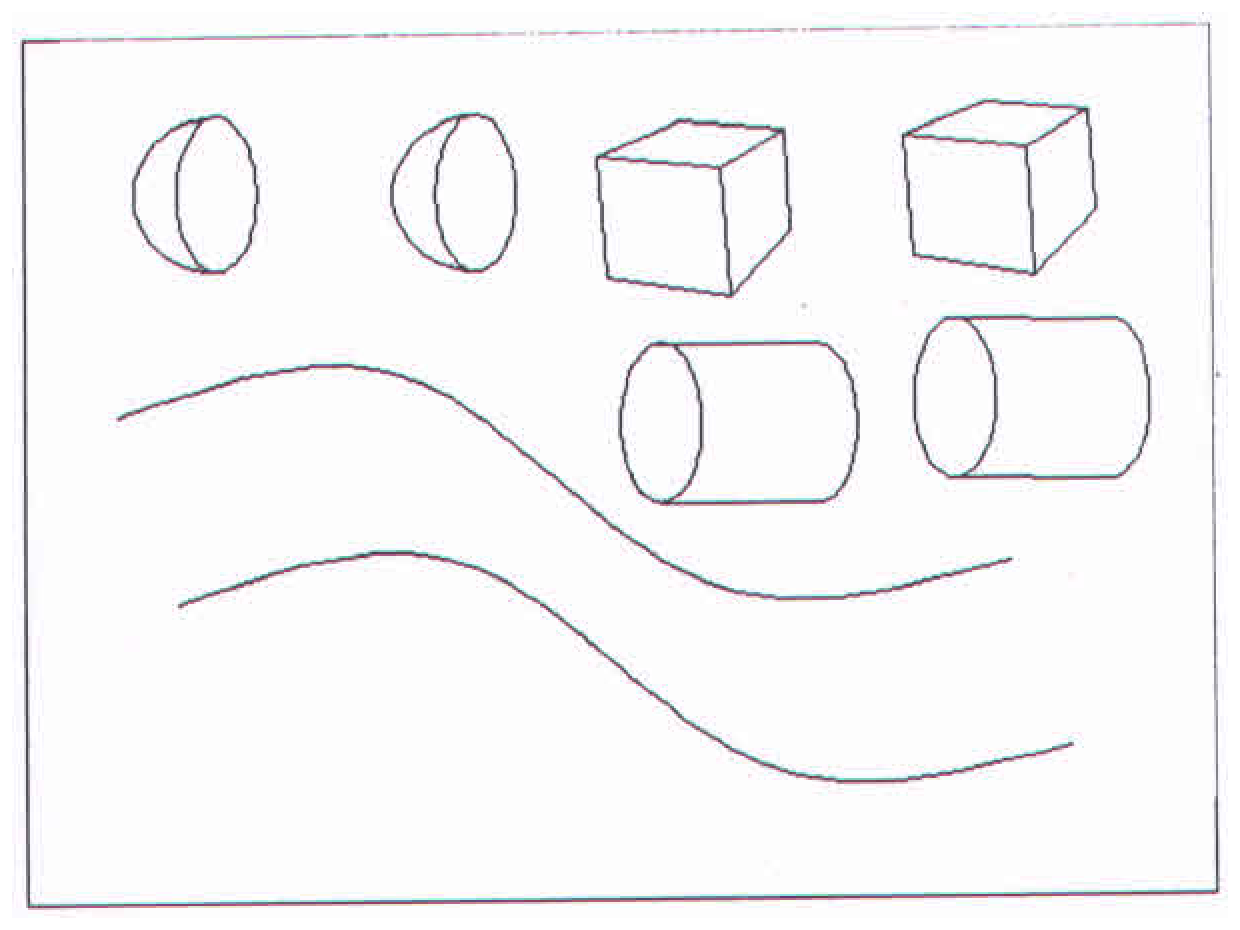
- Problem identification 30 min
Five problems at a typical Indian bus stop, with solutions
Problem Identification and Analysis Below is an image of the typical Bus Stop in India. Identify five unique problems from point of view of the users. a. Write these unique problems briefly. b. Illustrate a solution for each of these problems with a sketch. Evaluation criteria: 1. Identification of the each unique problem [10 marks] 2. Appropriateness of your solutions [10 marks]
CEED 2011 paper
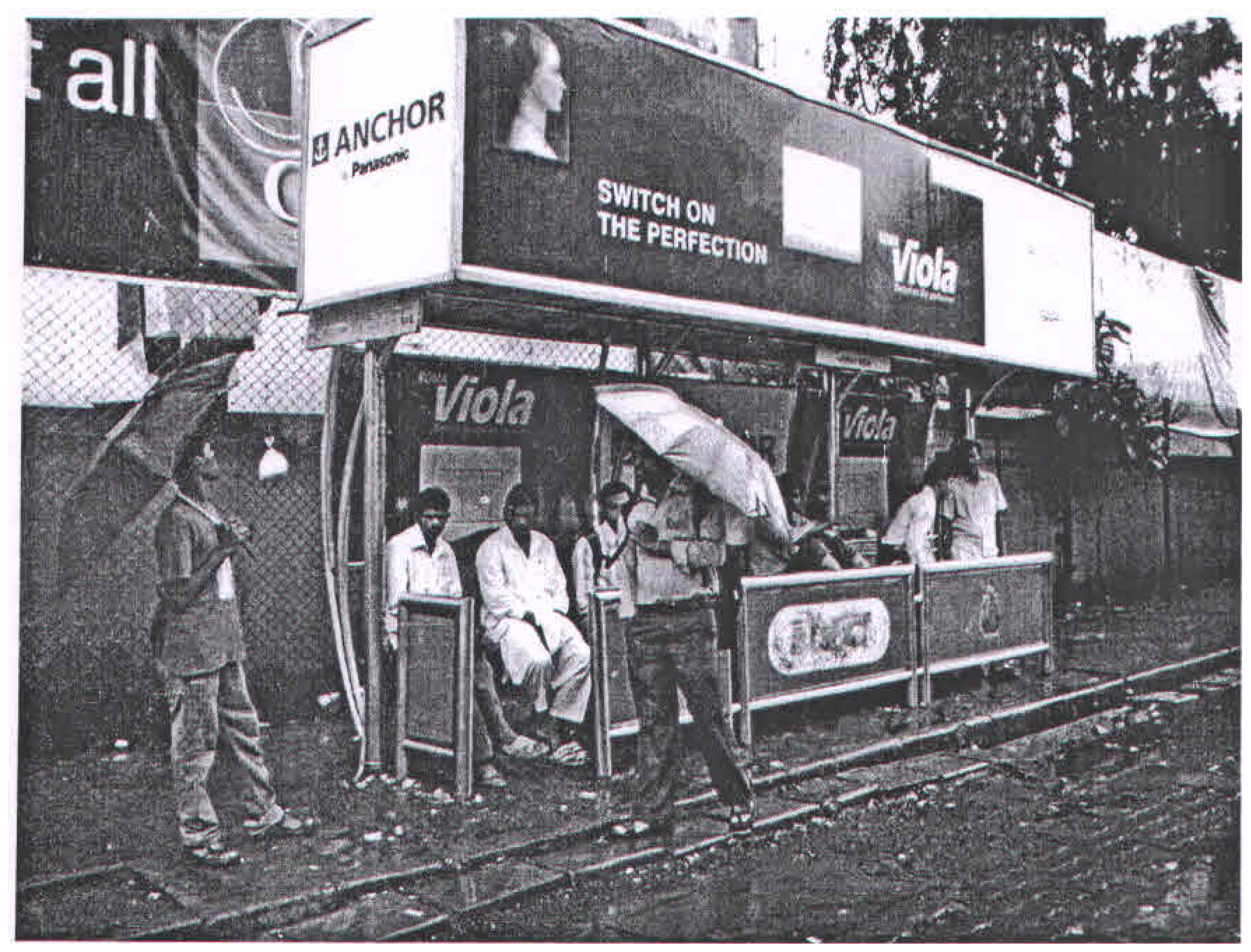
- Design aptitude 30 min
Logo and one-litre label for an organic vegetable drink
Design Problem Solving (in the exam: answer ANY ONE of A, B or C — this is [B], Communication Design) A new business venture wants to introduce an original health drink made from organically grown vegetables. Your task is to Design a Logo/Symbol to capture the essence of this brand (you are free to choose a name for your brand). You can make use of text, graphics or both. a. Identify at least five distinct factors essential for representing the brand. Write briefly. b. Generate at least three concepts through pencil sketches based on the factors identified above. Present these pencil sketches along with brief notes (if necessary). c. Synthesize your final concept of the Logo/Symbol and present this through drawing. You may use colours if necessary. d. Design the graphics for the label of a one litre pack of the above mentioned health drink. You need to make use of your final Logo/Symbol in the design of the label for packaging. Present this along with brief notes (if necessary). Evaluation criteria: 1. Identification of distinct features [5 marks] 2. Originality of your alternate concepts [10 marks] 3. Appropriateness of your final Logo/Symbol [5 marks] 4. Clarity of your final Label/Symbol Design for packaging [10 marks]
CEED 2011 paper
- Product sketch 30 min
A mobile phone for the elderly
Design Problem Solving (in the exam: answer ANY ONE of A, B or C — this is [A], Product Design) Mobile phones have become quite popular as communication devices. Mobile phones do have great potential to address the special needs of the elderly. Your task is to Design a new mobile phone for elderly. a. Identify at least five distinct factors essential for designing mobile phone for the elderly. Write briefly. b. Generate at least three concepts through pencil sketches based on the factors identified above. Present these pencil sketches along with brief notes (if necessary). c. Synthesize your final concept and present this through drawing, showing the overall form and the design of its interface. Evaluation criteria: 1. Identification of distinct factors [5 marks] 2. Originality of your alternate concepts [10 marks] 3. Appropriateness of your final solution [10 marks] 4. Quality of your presentation [5 marks]
CEED 2011 paper
- Storyboard 30 min
A comic strip: tiger, sparrow and poacher
Design Problem Solving (in the exam: answer ANY ONE of A, B or C — this is [C], Animation Design) Tiger and sparrow are on the verge of extinction (belong to endangered species) in our country. It is necessary to bring focus and attention for protection of these species. Create an interesting comic strip of five key frames involving a tiger, sparrow and poacher (a person who captures animals by laying a trap) with the use of text and images. a. Write the abstract of the story in five lines. b. Make at least three alternate sketches for each of the characters. c. Represent your storyboard in five key frames. If necessary, you can make use of colours. Evaluation criteria: 1. Abstract of the story [5 marks] 2. Appropriate portrayal of the characters [10 marks] 3. Originality of your story board (text and images) [10 marks] 4. Quality of your presentation [5 marks]
CEED 2011 paper
- Visual sensitivity 30 min
Colour a pair of shoes: one angry, one friendly
Visual Perception and Design Sensitivity (Q1.5) Below is an image of a pair of Shoes. Color the shoes to depict the following two expressions – Angry on the left shoe and Friendly on the right shoe.
CEED 2010 paper
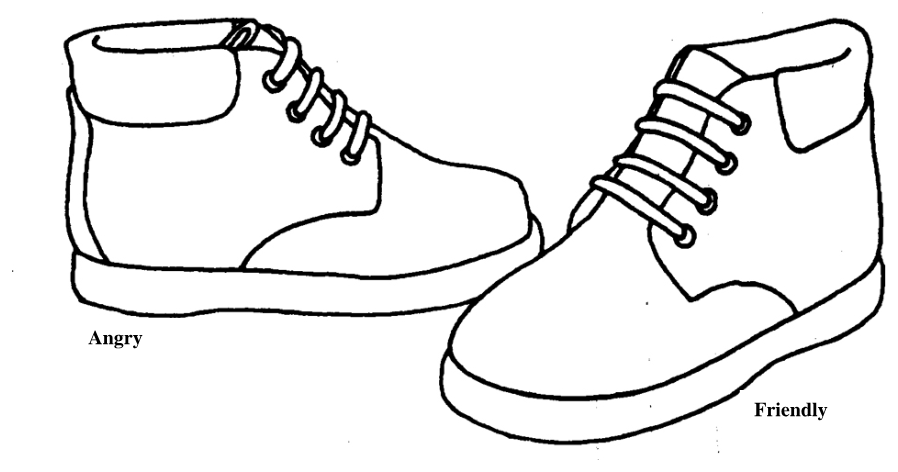
- Perspective 30 min
A rubber cup, glass saucer and wooden spoon
Drawing Abilities and Skills Illustrate in perspective, a composition with a CUP, SAUCER and a SPOON placed on a flat surface. The Cup is made of Rubber, the saucer is made of Glass and the spoon is made of Wood. The drawing needs to be done in Freehand using Black Pencil. (Do not use any drawing instruments) Evaluation criteria: 1. Composition and correctness of perspective [5 marks] 2. Quality of surface representation through shading [5 marks] 3. Quality of lines [5 marks] 4. Correctness of relative proportions [5 marks]
CEED 2010 paper
- Creativity 30 min
Five uses for discarded CDs
Creativity I Imagine five distinct uses of discarded Compact Disc (CD). The CD’s can be cut, bent, pasted or used in multiples to execute your ideas. Represent your ideas with five neat sketches along with brief notes (if necessary). Evaluation criteria: 1. Originality of ideas
CEED 2010 paper
- Problem identification 30 min
Five communication problems on a railway platform
Problem Identification and Analysis (in the exam: answer any one of A or B — this is [B]) Below is an image of a typical Railway Platform in India. Identify five unique communication design related problems from the point of view of the users. a. Write these unique problems briefly. b. Briefly justify each of these problems. c. Illustrate a solution for each of the identified problems with a sketch. Evaluation criteria: 1. Identification of unique problems and proper justification [10 marks] 2. Appropriateness of your solutions [10 marks]
CEED 2010 paper
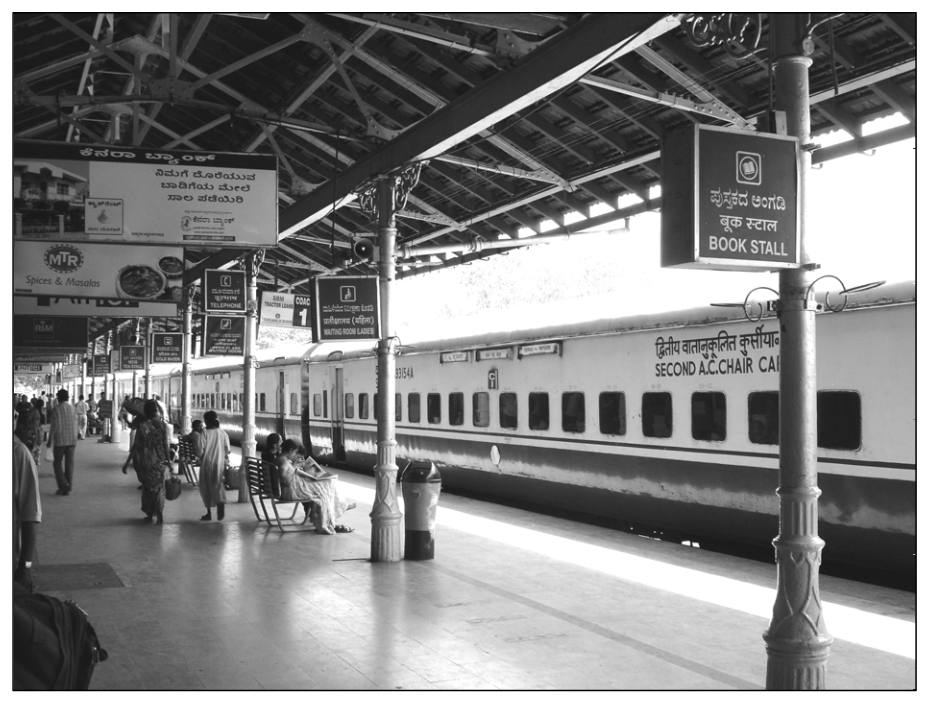
- Problem identification 30 min
Five problems with a pressure cooker, with solutions
Problem Identification and Analysis (in the exam: answer any one of A or B — this is [A]) Below is an image of a Pressure Cooker commonly used in the Indian households. Identify five unique problems from the point of view of the users. a. Write these unique problems briefly. b. Briefly justify each of these problems. c. Illustrate a solution for each of the identified problems with a sketch. Evaluation criteria: 1. Identification of unique problems and proper justification [10 marks] 2. Appropriateness of your solutions [10 marks]
CEED 2010 paper
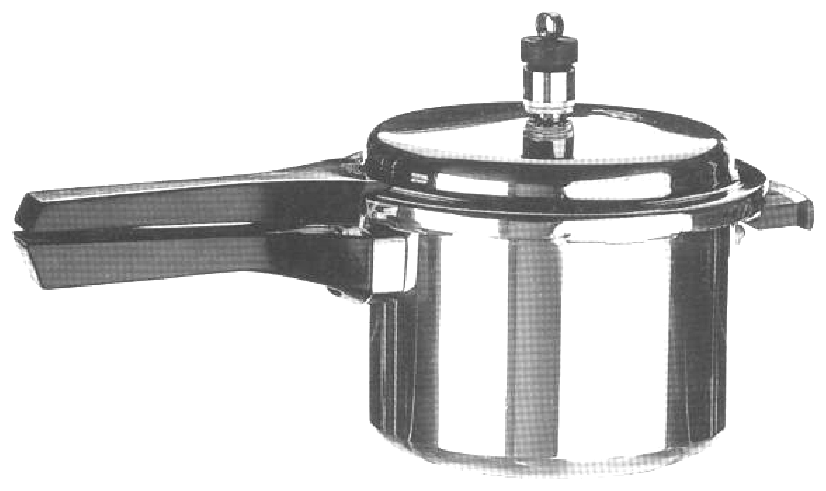
- Creativity 30 min
Five products from a cone, three discs and a wire
Creativity II You have at your disposal the following five objects – 1 Cone, 3 Discs and 1 flexible Wire as given below. Imagine five interesting products made out of a combination of all five objects. You can scale the objects to any size or dimension. Represent your ideas with neat sketches, name them along with brief notes (if necessary). Evaluation criteria: Originality of Ideas
CEED 2010 paper
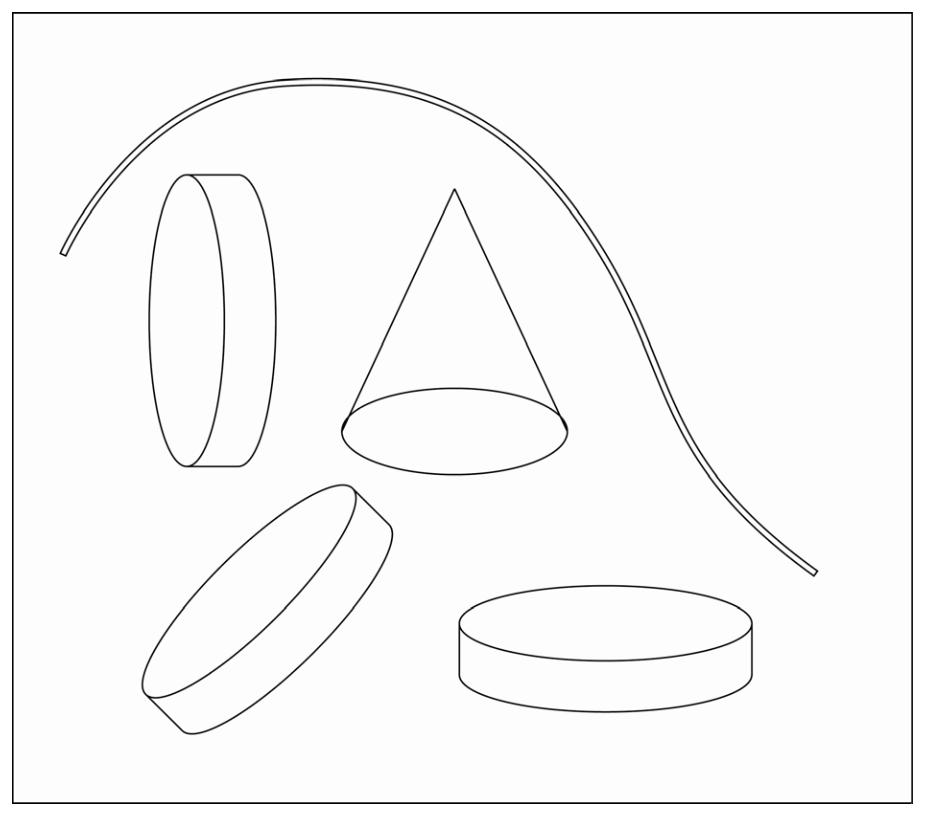
- Design aptitude 30 min
A symbol and school poster for swine flu (H1N1)
Design Problem Solving (in the exam: answer any one of A, B or C — this is [B], Communication Design) Influenza-A (H1N1), also known as the Swine Flu virus is a new influenza virus causing illness in people. This virus is contagious and spreads rapidly. Your task here is to Design a new Symbol to capture the essence of this disease. You can make use of Text, Graphics or both. a. Identify at least five distinct factors essential for representing the disease. Write this briefly. b. Generate at least three concepts through pencil sketches, taking into consideration the factors identified above. Make these pencil sketches along with brief notes (if necessary). c. Synthesize your final concept and present this through drawing. You may use colours, if necessary. d. Design a poster to create awareness about this disease among school children. You need to make use of your final symbol in the design of the poster. Present this along with brief notes (if necessary). Evaluation criteria: 1. Identification of Distinct Factors [5 marks] 2. Novelty of your alternate concepts [5 marks] 3. Appropriateness of your final symbol [5 marks] 4. Clarity of your final poster design [10 marks]
CEED 2010 paper
- Product sketch 30 min
Scissors for people who are blind
Design Problem Solving (in the exam: answer any one of A, B or C — this is [A], Product Design / Interaction Design) In the world of the Visually Impaired (Fully Blind), there is a need to equip them with special products that will help them carry out their day to day activities with an ease. One such product is a pair of scissors, which can be used for cutting liquid pouches, cloth, paper, etc. Your task here is to Design a new pair of Scissors for the visually impaired. You can make use of new technologies (if needed). a. Identify at least five distinct factors essential for designing a pair of scissors for the blind. Write this briefly. b. Generate at least three concepts through pencil sketches based on the factors identified above. Present these pencil sketches along with brief notes (if necessary). c. Synthesize your final concept and present this through drawing, showing the overall form and its construction details, mentioning the materials. Evaluation criteria: 1. Identification of distinct factors [5 marks] 2. Novelty of your alternate concepts [5 marks] 3. Appropriateness of your final solution [10 marks] 4. Quality of your presentation [5 marks]
CEED 2010 paper
- Storyboard 30 min
A drought comic strip: farmer, politician and God
Design Problem Solving (in the exam: answer any one of A, B or C — this is [C], Animation Design) Drought is major problem faced by our country. This is going to effect our agricultural sector badly and would have a negative impact on our national economy. Create a comic strip of five key frames involving a Farmer, Politician and God with the use of text and images. a. Make at least three alternate sketches for each of the characters. b. Represent your storyboard in five key frames. If necessary, you can make use of colours. Evaluation criteria: 1. Appropriate portrayal of the characters [10 marks] 2. Originality of your storyboard (text and images) [10 marks] 3. Quality of your presentation [5 marks]
CEED 2010 paper